
Commercial & Industrial Steam Cleaners | Pure Steam Cleaners.uk


Table of Contents
- What You’ll Need Before You Start
- Step 1: Prepare and Isolate Equipment Safely
- Step 2: Deep Cleaning Commercial Kitchen Equipment by Type
- How to Clean a Commercial Oven Without Damaging It
- Steam Cleaning Commercial Kitchen Equipment: What It Handles Best
- Your Commercial Kitchen Cleaning Checklist
- Building a Restaurant Kitchen Cleaning Schedule
- Common Mistakes to Avoid
- Frequently Asked Questions
Last Updated: October 18, 2026
What You’ll Need Before You Start
Deep cleaning commercial kitchen equipment works best when you treat it as a planned job, not a spare-hour task. At Pure Steam Cleaners, we supply machines for exactly this kind of work, and the pattern we see is simple: teams that prepare properly finish faster and damage less.
Gather these before you touch anything:
- PPE: heat-resistant gloves, eye protection, non-slip footwear
- Tools: soft brushes, nylon detail brushes, squeegees, microfibre cloths, a scraper for burnt-on residue
- Cleaning agent: a food-safe degreaser, plus a steam cleaner for chemical-free work
- Documentation: your cleaning schedule, a sign-off sheet, and your food safety paperwork
One point most guides skip: check your steam unit’s manual before you start. Regular boiler care is required, including in hard-water areas, so follow the operating and maintenance instructions supplied with your machine.
Never mix cleaning chemicals. Combining a bleach-based product with an acidic descaler can release toxic gas in a confined kitchen (Disinfectants in the food and drink industry). Use one agent at a time and rinse between stages.
Step 1: Prepare and Isolate Equipment Safely
Safety comes first, and it is not optional. Isolate every appliance at the isolator switch before you clean it, not just at the control panel. Lock off where your policy requires it.
Then work through this sequence:
- Switch off and unplug or isolate the appliance
- Let hot surfaces cool to a safe temperature
- Remove loose parts, trays, racks and filters
- Clear the floor area and put up a wet floor sign
- Confirm gas appliances are off at the supply
For gas equipment, Gas Safe Register guidance on commercial catering appliances sets out what a competent person must check. Cleaning is not a gas safety inspection, and you should never dismantle gas lines yourself.
Step 2: Deep Cleaning Commercial Kitchen Equipment by Type
Different equipment needs different handling. Treating a fryer like a work surface wastes time and risks damage.
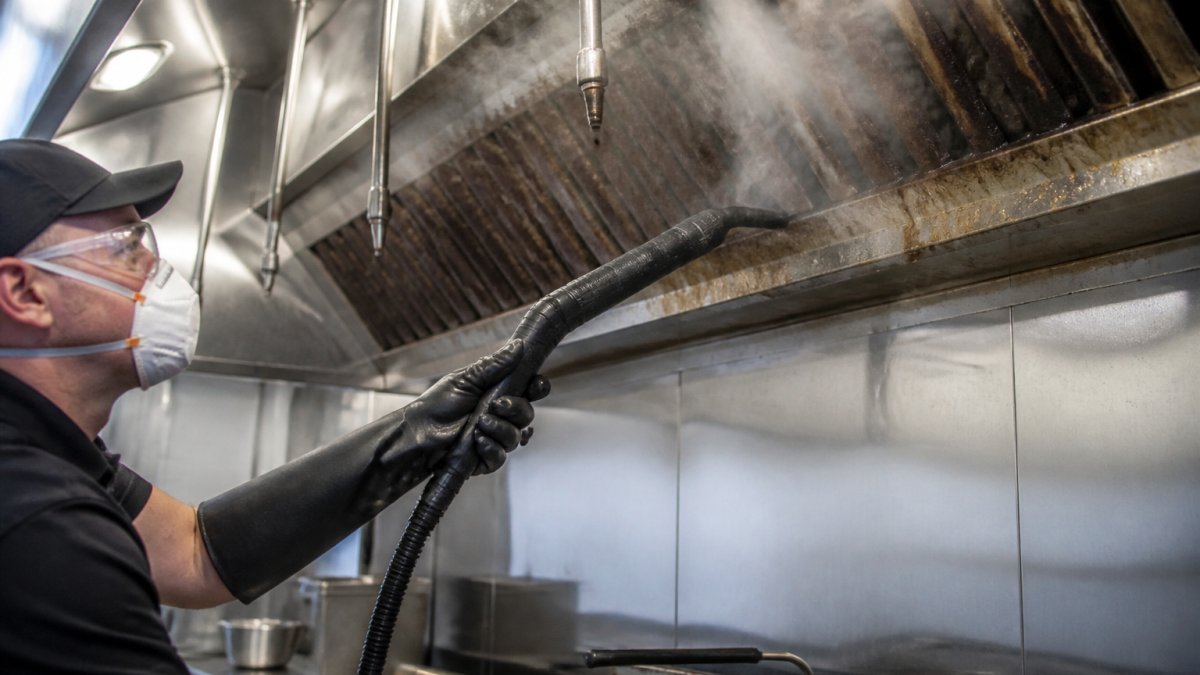
Consistent maintenance of extraction systems remains a fundamental requirement when deep cleaning commercial kitchens, ensuring that the latest industry standards for hygiene and fire safety are met throughout the facility.
Fryers, Grills and Griddles
Drain fryer oil while it is still warm, then remove and soak the basket. Scrape the fryer body and wipe out residue before refilling with fresh oil. For grills and griddles, use a scraper on the hot plate once cool, then a nylon brush on the edges. Steam lifts baked-on grease from grill surrounds well because the heat softens fat without scratching steel.
Extraction Canopies and Ductwork
Canopy filters go into a soak tank first. The canopy body and plenum then need degreasing, and steam reaches into corners that cloths miss. Ductwork beyond the filter is a specialist job. Health and Safety Executive guidance on kitchen extract ventilation treats grease build-up in ducts as a fire risk, so log when it was last cleaned.
Work Surfaces, Splashbacks and Sinks
Clear surfaces, then work top to bottom. Steam loosens grease film on splashbacks before you wipe. Pay attention to the joints where steel meets wall, because that is where residue collects. Finish sinks last, and sanitise drains.
How to Clean a Commercial Oven Without Damaging It
The safest method is heat and dwell time, not aggression. Steam softens carbonised grease so it lifts with a nylon brush instead of a metal scraper.
Work in this order:
- Remove racks, trays and side supports
- Brush out loose debris dry
- Apply food-safe degreaser to the worst areas and let it dwell
- Steam the cavity, door seal and glass
- Wipe out, then repeat on stubborn patches
Avoid caustic oven cleaners on aluminium and on door seals, because they pit the surface and shorten seal life. Never steam directly into electrical panels or control housings.
Clean the oven door glass from the inside with steam, then buff with a dry microfibre cloth. It removes baked-on film without scratching, and you skip the smeared finish that chemical sprays leave behind.
Steam Cleaning Commercial Kitchen Equipment: What It Handles Best
Steam cleaning commercial kitchen equipment suits grease, grime and sanitisation on hard surfaces. It uses very little water and no harsh chemicals, which is why hospitals, care homes and food manufacturers lean on it.
Pure i8 Heavy Duty Industrial Steam & Vacuum Cleaner →
Where steam wins:
- Heavy grease on canopies, grills and splashbacks
- Sanitising work surfaces and handles between shifts
- Detail work around seals, hinges and control surrounds
- Hard-to-reach areas where cloths cannot get
Where it does not replace other methods:
- Duct internals beyond the filter, which need specialist access
- Electrical components, which must stay dry
- Cold storage interiors, which need controlled thaw-and-clean cycles
For larger sites, a machine like our Pure i8 heavy-duty industrial steam and vacuum cleaner combines steam, vacuum and hot water in one unit, which cuts the back-and-forth between cleaning and extraction.

Your Commercial Kitchen Cleaning Checklist
Use this commercial kitchen cleaning checklist as your sign-off record. Tick each line, initial it, and file it with your daily paperwork.
- Fryer drained, body degreased, basket soaked
- Grill plates scraped and brushed
- Canopy filters soaked and refitted
- Canopy body and plenum degreased
- Oven cavity, seal and glass cleaned
- Work surfaces and splashbacks steamed
- Sinks and drains sanitised
- Floor edges and corners cleaned
- Waste area cleared and washed
- Equipment switched back on and tested
Building a Restaurant Kitchen Cleaning Schedule
A restaurant kitchen cleaning schedule splits work into daily, weekly and periodic tasks so nothing waits until it becomes a problem.
| Frequency | Tasks | Owner |
|---|---|---|
| Daily | Surfaces, sinks, floors, fryer filter, grill scrape | Shift team |
| Weekly | Canopy filters, oven interior, splashbacks, drain sanitise | Cleaning lead |
| Monthly | Canopy body and plenum, full oven deep clean, seals | Supervisor |
| Quarterly | Duct inspection, equipment service check, schedule review | Manager |
Build the schedule around service times, not against them. Most kitchens find a short deep clean after close beats a long one before open.
Common Mistakes to Avoid
The biggest mistake is cleaning hot equipment. It warps surfaces, bakes residue harder and risks burns.
Others we see often:
- Skipping the isolator: wiping a live appliance is a shock risk
- Over-wetting electrical areas: steam near control panels causes faults
- Using metal scrapers on steel: they leave scratches that trap grease
- Ignoring the schedule: a missed week becomes a two-day job
- No records: inspectors want proof, not memory
Deep cleaning commercial kitchen equipment is a routine, not a rescue mission. Build the schedule, log the work, and the heavy jobs stay small.
Keeping a commercial kitchen genuinely clean is a constant challenge, and inspectors do not accept good intentions as evidence. Pure Steam Cleaners builds machines for exactly this work: patented self-descaling boiler technology, a 3-year boiler guarantee, and free next working day delivery on orders placed before 1pm. Our equipment removes heavy dirt and grease without harsh chemicals, so your team cleans faster and your records stand up to scrutiny. Get started with Pure Steam Cleaners and put a cleaning routine in place that holds.
Frequently Asked Questions
How often should commercial kitchen equipment be deep cleaned?
Most commercial kitchens need a deep clean weekly for high-use items such as fryers, grills and work surfaces, with extraction canopies and ductwork cleaned on a scheduled basis depending on grease volume. Ovens and larger equipment can often go longer between deep cleans if daily degreasing is kept up. Build the frequency into your restaurant kitchen cleaning schedule and record each deep clean so you can show a clear audit trail during inspections.
Can steam be used to clean commercial kitchen equipment?
Yes. Steam cleaning commercial kitchen equipment works well on stainless steel surfaces, ovens, grills, canopies and floor areas because the heat loosens baked-on grease and grime without harsh chemicals. Machines with a vacuum function let you remove the loosened waste in the same pass. Always check the manufacturer’s instructions for each item first, and avoid directing steam at electrical components, control panels or seals.
How do you remove heavy grease from commercial kitchen equipment?
Start by scraping off loose residue, then apply steam or a suitable degreaser to soften the grease before wiping or vacuuming it away. On extraction canopies and ductwork, work from the top down so loosened grease does not run onto clean surfaces. For fryers and grills, empty and drain the unit first, then steam the interior and wipe with a microfibre cloth. Repeat on stubborn patches rather than using more force.
What should a commercial kitchen cleaning checklist include?
A practical commercial kitchen cleaning checklist should cover equipment isolation and cool-down, surface preparation, degreasing of fryers, grills and ovens, extraction canopy and ductwork cleaning, work surfaces and splashbacks, sinks and drainage, floor areas and waste storage. Add a sign-off column for date, initials and any issues found, and keep completed sheets on file. Review the checklist quarterly and update it when equipment or menu changes affect grease levels.
