
Commercial & Industrial Steam Cleaners | Pure Steam Cleaners.uk


Key takeaways:
- Steam cleaners use relatively little water. For example, the Pure i6-SO has a steam production rate equivalent to approximately 3.18 litres of water per hour at continuous rated output.
- Steam output determines water consumption. A machine’s steam production rate provides a useful indication of how much water it converts into steam.
- Steam cleaning and pressure washing work differently. Steam relies on heat and controlled moisture, while pressure washing uses a continuous stream of water.
- Water efficiency goes beyond the machine. Cleaning techniques, steam settings and maintenance all contribute to how efficiently water is used.
- Pure Steam Cleaners offers water-efficient cleaning solutions. Its commercial and industrial ranges include adjustable steam flow and self-descaling boiler technology.
Industrial steam cleaners can deliver powerful cleaning performance using surprisingly small amounts of water. Instead of soaking surfaces or relying on a constant flow of water, these machines use heated steam to loosen stubborn dirt, grease and grime. But how much water do they actually use? And could switching to steam cleaning help your business reduce water consumption? Understanding how these machines work, what their specifications mean and how to use them efficiently can help you make a more informed investment.
How Much Water Does an Industrial Steam Cleaner Use?

If you’re considering investing in a professional steam cleaner, water consumption is worth understanding. Unlike a pressure washer, which delivers water through a high-pressure jet, a steam cleaner heats water and releases it as steam. This allows you to apply heat directly to the surface you’re cleaning without continuously flushing it with liquid water. To understand how much water a particular machine uses, look at its steam production rate. For example, the Pure i6-SO Industrial Steam Cleaner produces 53 grams of steam per minute, according to its published specifications.
That works out at:
53 grams × 60 minutes = 3,180 grams of water per hour.
As one litre of water weighs approximately one kilogram, this is equivalent to around 3.18 litres of water per hour at continuous rated steam output. It’s a useful figure when estimating operating requirements, although actual consumption will depend on how the machine is used. Additional water supplied through separate cleaning functions is not included in this calculation.
How Do Steam Cleaners Use Water So Efficiently?

Think about washing a greasy baking tray. You might fill the sink with hot water, add washing-up liquid and leave the tray soaking before scrubbing away the grease. An industrial steam cleaner approaches the problem differently. Rather than immersing the surface in water, it directs heat and moisture towards the contamination. The steam transfers heat to the surface, helping soften deposits so they can be removed more easily. This makes steam particularly useful for targeted cleaning tasks where applying large amounts of water would be inconvenient. For instance, cleaning around kitchen equipment, machinery or awkward corners may require precision rather than a continuous rinse. Of course, steam doesn’t make dirt disappear. Once contamination has been loosened, it still needs to be wiped, brushed or extracted away. The advantage is that you can concentrate the cleaning action where it’s needed, rather than applying water across an entire area.
How Does an Industrial Steam Cleaner Work?

An industrial steam cleaner works by heating water inside a boiler until steam is produced. The steam travels through a hose and exits through a nozzle or cleaning attachment. When directed towards a surface, its heat helps loosen dirt and deposits. The operator can then remove the loosened contamination using a cloth, brush or vacuum extraction system, depending on the machine and application. Some professional models also include additional features such as adjustable steam output, detergent delivery and hot-water functions. For example, at Pure Steam Cleaners, we offer machines with automatic boiler refilling and adjustable steam flow, allowing operators to manage steam delivery according to their cleaning requirements. These features are particularly useful in workplaces where different surfaces require different cleaning approaches.
What Is the Difference Between Steam Output and Water Tank Capacity?

When browsing for an industrial steam cleaner, you’ll probably notice specifications for both steam production and water capacity. They’re related, but they tell you different things. Steam output describes the amount of steam the machine can produce over a given period. It’s commonly expressed in grams per minute or kilograms per hour. Water tank capacity tells you how much water a tank can hold. For example, the Pure i6-SO has a 3.5-litre boiler and a separate 5-litre tank for boiler refilling. However, that doesn’t mean the machine uses 3.5 or 5 litres every hour. Tank capacity describes storage, while steam production provides an indication of water converted into steam. When comparing machines, it’s important not to confuse the two.
Does Higher Steam Pressure Mean More Water Consumption?
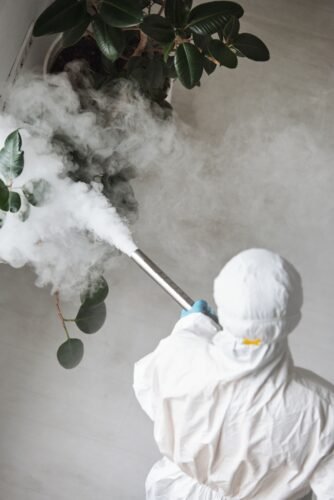
Not necessarily. Steam pressure is generally measured in bar and describes the pressure at which steam is generated or delivered. Water consumption, meanwhile, relates to the amount of steam produced and any additional water supplied. An industrial steam cleaner with higher pressure doesn’t automatically consume more water than a lower-pressure model. For example, the Pure i6-SO operates at a specified steam pressure of 6 bar, with a boiler steam temperature of 165°C and a production rate of 53 grams per minute. Each figure tells you something different about the machine. When selecting equipment, consider how these specifications work together rather than assuming that the highest pressure will always deliver the best results.
Does Steam Temperature Affect Water Usage?

Temperature is central to how an industrial steam cleaner works. Hot steam transfers thermal energy to the surface being cleaned. This can help soften grease, loosen dried-on residues and make certain deposits easier to remove. However, temperature alone doesn’t tell you how much water a machine consumes. Water usage is more directly related to its steam production rate and operating settings. For example, a machine with adjustable steam output allows the operator to control how much steam is released. This means you can adapt the cleaning process to suit the task instead of using maximum output throughout every job. The goal is to apply enough heat and moisture to clean effectively without unnecessarily extending the cleaning process.
What Is Dry Steam Cleaning?

Dry steam cleaning uses steam with relatively low liquid-water content. Despite the name, dry steam isn’t completely moisture-free. When steam contacts a cooler surface, some of it condenses into water. However, the process is designed to apply heat without the large quantities of liquid water associated with conventional washing. This makes a dry industrial steam cleaner particularly useful when cleaning areas where excessive moisture would be undesirable. At Pure Steam Cleaners, we specialise in commercial and industrial dry steam cleaning equipment, offering machines designed for applications ranging from kitchens and hospitality facilities to manufacturing environments. The important thing to remember is that low-moisture cleaning doesn’t mean every surface is suitable for steam. Always consider the material, operating temperature and manufacturer’s cleaning recommendations.
Industrial Steam Cleaners vs Pressure Washers: Which Uses More Water?

Steam cleaning and pressure washing are both valuable cleaning methods, but they operate in very different ways. Pressure washers use a high-pressure stream of water to dislodge dirt and rinse surfaces. An industrial steam cleaner, on the other hand, uses heated steam to loosen contamination, often followed by wiping, brushing or extraction. To illustrate the difference in operating water flow, consider two published equipment specifications. The Pure i6-SO produces 53 grams of steam per minute, equivalent to approximately 3.18 litres of water per hour for steam generation.
The Kärcher HDS 7/10-4M professional pressure washer has a specified water flow range of 350–700 litres per hour.
| Equipment | Published output specification |
|---|---|
| Pure i6-SO steam cleaner | 53 g/min of steam, approximately 3.18 L/hour |
| Kärcher HDS 7/10-4M pressure washer | 350–700 L/hour of water |
These figures demonstrate the difference in operating flow rates, but they don’t represent a like-for-like cleaning performance test. Pressure washers are particularly useful for rinsing large areas, while an industrial steam cleaner is often better suited to targeted cleaning and grease removal. The best choice depends on what you’re cleaning, not simply which machine uses the least water.
Can Steam Cleaning Help Reduce Business Water Consumption?

For businesses reviewing their cleaning procedures, steam cleaning presents an opportunity to reconsider how water is used. Consider a workplace where staff regularly clean greasy equipment, tiled surfaces or hard-to-reach fixtures. Some tasks may require a continuous flow of water. Others may be better suited to concentrated steam followed by wiping or extraction. Identifying which jobs can be completed effectively with steam may help reduce unnecessary water use. However, it’s important to consider the entire cleaning process. If a task still requires extensive rinsing afterwards, the total water saving may be smaller than the machine’s steam production rate initially suggests. A useful approach is to compare how much water is used to complete the same cleaning task to an acceptable standard. That gives you a more meaningful picture than comparing equipment specifications alone.
Does Using Less Water Make Cleaning More Cost-Effective?

Water consumption is one part of the cost of commercial cleaning. Using less water may help reduce water supply and wastewater charges, depending on your business’s arrangements. However, steam cleaners also consume energy to heat water. That means a complete running cost comparison should consider electricity, cleaning time, maintenance and any additional products used during the process. Labour is another important consideration. If an operator spends less time dealing with stubborn contamination, that could influence the overall cost of a cleaning task. Rather than looking at water consumption in isolation, consider the resources required to achieve the result you need. A machine that suits your cleaning workload is likely to be a more practical investment than one selected purely for having the lowest water usage.
Where Is Low-Water Steam Cleaning Most Useful?

Different workplaces have different cleaning challenges. In some environments, water can be used freely and easily drained away. In others, applying unnecessary moisture creates additional work. Steam cleaning can be particularly appealing where targeted cleaning is required.
Commercial Kitchens and Food Preparation Areas

Commercial kitchens regularly deal with cooking grease, food residues and deposits around equipment. Steam can help soften greasy contamination on suitable surfaces, making it easier to remove. Potential applications include ovens, extraction components, tiled surfaces and accessible areas around kitchen equipment. However, operators should always follow equipment manufacturers’ instructions and the workplace’s food hygiene procedures. Steam cleaning should not automatically be treated as a substitute for required cleaning and disinfection processes.
Manufacturing and Industrial Facilities

Manufacturing environments can present demanding cleaning conditions. Machinery, metal surfaces and production areas may accumulate oils, grease and other residues that require regular attention. Steam cleaning provides another option for tackling suitable contamination without relying entirely on water-based rinsing. However, care is essential around electrical components, sensitive equipment and surfaces that may be damaged by heat or moisture. Machinery should be isolated where necessary, and cleaning procedures should follow site safety requirements.
Hospitality and Leisure Facilities
Hotels, leisure centres and other busy facilities often need to clean around customers, staff and daily operations. Steam cleaning may be suitable for certain tiled surfaces, grout, fixtures and other compatible materials. The ability to direct steam towards specific areas can be helpful when cleaning intricate details or awkward spaces. As with any cleaning method, surfaces should be checked for residual moisture and allowed to dry before being returned to use.
Automotive and Transport Cleaning

Vehicle cleaning often involves a mixture of materials, including plastics, fabrics, metals and coated surfaces. Steam can be used for selected cleaning tasks where controlled heat and moisture are appropriate. However, not every vehicle component is suitable for steam exposure. Operators should follow material-specific guidance and avoid applying excessive heat to sensitive finishes, electronics or adhesives.
How Can Businesses Reduce Water Waste When Steam Cleaning?

Choosing suitable equipment is a good starting point, but how you use it matters just as much. A machine with adjustable steam output gives you more control over the amount of steam released during cleaning. For lighter contamination, you may not need to operate at the highest setting. Selecting the correct attachment also helps direct steam towards the intended area. For example, a narrow nozzle may be useful for detailed cleaning, while a suitable brush attachment can assist with larger or textured surfaces. It’s also worth reviewing your cleaning routine. Are operators repeatedly treating the same surface without removing loosened dirt? Are they using additional water when it isn’t needed? Small adjustments to technique can help make the cleaning process more controlled.
Why Does Steam Cleaner Maintenance Matter?

A steam cleaner needs regular care to continue operating as intended. One important consideration is limescale. When water is heated, dissolved minerals can form deposits inside heating equipment. Over time, mineral build-up may interfere with operation and create maintenance problems. At Pure Steam Cleaners, we offer patented self-descaling boiler technology across our range, designed to address limescale build-up. For businesses using steam equipment regularly, this is a useful feature to consider alongside water consumption and cleaning performance. Following the manufacturer’s maintenance instructions, checking attachments and using the recommended water supply will help keep the machine in suitable working condition.
How Do Pure Steam Cleaners Support Water-Efficient Cleaning?

At Pure Steam Cleaners, the commercial and industrial ranges are designed for different cleaning workloads. We recommend its commercial machines for applications involving up to approximately 15 hours of use per week, while its industrial range is intended for more demanding workloads exceeding this level. The range includes features such as adjustable steam flow, automatic boiler refilling and self-descaling technology. For example, the Pure i6-SO combines a 6-bar steam system with separate water and detergent delivery functions. This allows operators to select different cleaning approaches depending on the task. The company also offers steam and vacuum models for applications where collecting loosened dirt and moisture is useful. Choosing between these machines involves more than comparing water consumption. Consider the type of contamination, frequency of use, surfaces and additional cleaning functions required.
What Should You Look for When Choosing a Water-Efficient Steam Cleaner?

Before purchasing a steam cleaner, it’s worth asking a few practical questions. What surfaces will you be cleaning? How frequently will the machine operate? Will you need detergent delivery, vacuum extraction or continuous boiler refilling? You should also check the machine’s published steam production rate. This provides a useful starting point for understanding water consumption during steam generation. Other specifications worth comparing include steam pressure, boiler temperature, water capacity, power requirements and available attachments. A machine intended for occasional commercial use may have different requirements from one operating regularly in an industrial setting. The right choice is the machine that can complete your cleaning tasks effectively while fitting your workplace’s operational needs.
Find the Right Steam Cleaner for Your Business

If you’re looking to make your cleaning routine more water-conscious, choosing suitable equipment is an important first step.
At Pure Steam Cleaners, we offer a range of industrial steam cleaners designed for professional applications, with options including adjustable steam flow, self-descaling boilers and additional cleaning functions. Not sure which model would suit your workplace? Explore our website or use the Help Me Choose service to find equipment suited to your cleaning requirements. You can also contact the team on 01903 755128 to discuss your application and find a machine that balances cleaning performance, practicality and water consumption.
Check out our range of self-descaling steamers!
Pure Steam Cleaners specialises in hiring and selling powerful, self-descaling commercial and industrial dry steam cleaners. Our machines are ideal for deep cleaning in kitchens, healthcare facilities, and manufacturing plants without harsh chemicals. Hires and sells new and second-hand cleaning equipment, including industrial vacuums, floor scrubbers, pressure washers, and floor polishers at Cleaning Equipment Services Ltd. We’re always available to answer any questions and provide guidance on the best cleaning methods and procedures. We’re also very patient and accommodating with explaining the operation and maintenance of the equipment.

Leave a Reply
You must be logged in to post a comment.