
Commercial & Industrial Steam Cleaners | Pure Steam Cleaners.uk


Key takeaways:
- Less water, more efficient cleaning: Low-moisture steam cleaning uses a small amount of water to produce high-temperature steam, helping remove dirt, grease and grime without soaking surfaces.
- Faster drying times: With minimal residual moisture, many surfaces can return to use sooner, reducing disruption in busy commercial environments.
- Reduced reliance on chemicals: High-temperature steam can tackle many everyday cleaning challenges using water alone, helping businesses reduce their chemical consumption.
- Versatile cleaning applications: From kitchens and bathrooms to upholstery, machinery and public facilities, steam offers a practical solution for a wide range of suitable surfaces.
- A smarter approach to commercial cleaning: Professional steam cleaning equipment can help businesses improve cleaning efficiency, conserve water and maintain high hygiene standards.
Check out our range of dry steam cleaners!
What Is Low-Moisture Steam Cleaning?

Imagine cleaning stubborn grease, dirt and bacteria without leaving surfaces dripping wet or relying on a cupboard full of chemicals. That’s the appeal of low-moisture steam cleaning, a method that uses high-temperature steam with relatively little liquid water to clean a variety of surfaces. Unlike traditional cleaning methods that often depend on large quantities of water and detergent, professional steam cleaners heat water in a boiler to produce pressurised steam. When released through a nozzle or cleaning attachment, the steam transfers heat to the surface, helping loosen grease, grime and other unwanted deposits. The key difference is the amount of moisture delivered during cleaning. Dry vapour steam cleaners are designed to produce steam with a relatively low liquid-water content, allowing operators to clean without excessively wetting suitable surfaces. For businesses, this offers several practical advantages. Less residual moisture can mean shorter drying times, reduced water consumption and fewer interruptions to daily operations. At Pure Steam Cleaners, we focus is on professional steam cleaning solutions that help businesses tackle demanding cleaning tasks efficiently.
How Does Low-Moisture Steam Cleaning Work?
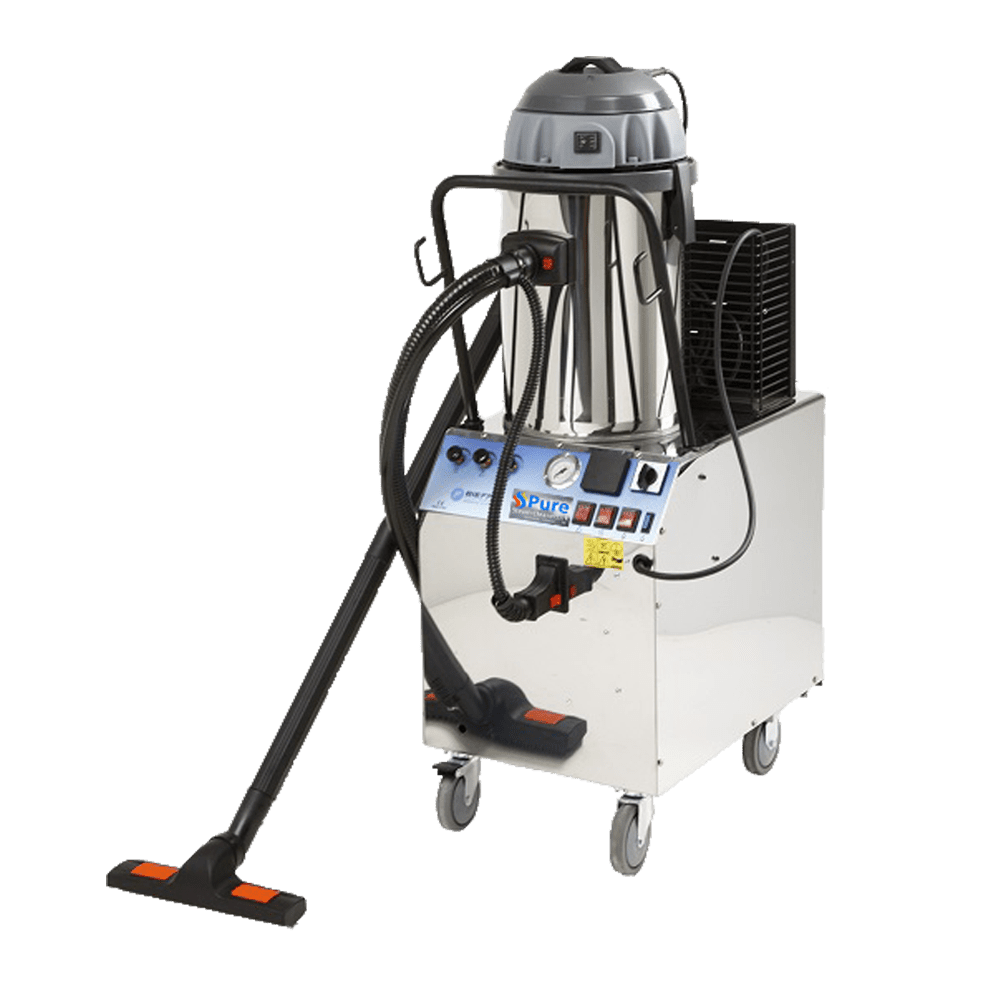
The technology behind professional steam cleaning is surprisingly straightforward. Water enters a boiler, where it is heated under pressure to produce steam. The steam then travels through a hose and cleaning attachment before reaching the surface being treated. Once the hot vapour comes into contact with dirt or grease, thermal energy helps soften and loosen the contamination. Brushes, cloths or other attachments can then remove the released material.
Three main elements contribute to the cleaning process:
- Heat: Helps break down grease, soften stubborn residues and support hygienic cleaning.
- Steam delivery: Directs thermal energy into joints, corners and textured surfaces that may be difficult to reach with conventional tools.
- Mechanical action: Brushes, wiping and extraction physically remove loosened dirt and contamination.
It’s important to remember that steam doesn’t make dirt disappear. Contaminants still need to be wiped away, collected or extracted. The effectiveness of the process depends on factors such as steam temperature at the surface, contact time, the type of contamination and the cleaning technique used.
Why Does Using Less Water Matter?

Water is an essential cleaning resource, but using more of it doesn’t automatically produce better results. Think about washing a greasy baking tray. Filling it with cold water may loosen some residue, but heat often makes the job considerably easier. Steam cleaning follows a similar principle. Rather than relying primarily on large volumes of water to flush away contamination, it uses thermal energy to help release dirt from surfaces.
Reducing Water Consumption
Traditional cleaning methods can involve repeated rinsing, buckets of cleaning solution and significant quantities of wastewater. Professional steam cleaners typically use much smaller volumes of water during operation, although exact consumption varies between machines and applications. For businesses cleaning regularly, reducing unnecessary water use can contribute to more efficient resource management. This can be particularly valuable in environments where water supply, drainage or wastewater handling creates additional operational challenges.
Managing Wastewater More Effectively
Less water applied to a surface generally means less liquid requiring collection afterwards. However, steam cleaning doesn’t eliminate wastewater entirely. Grease, dissolved dirt and other residues may still need to be removed using cloths, extraction equipment or suitable collection systems. In commercial environments, wastewater must also be handled appropriately, particularly when it contains oils, chemicals or other contaminants.
Faster Drying Times and Less Disruption

One of the biggest frustrations with conventional wet cleaning is waiting for everything to dry. A freshly cleaned floor may need to remain closed to foot traffic. Upholstery can be unavailable for hours, while excessive moisture around equipment can create additional concerns. Using low-moisture steam cleaning can help reduce these problems by limiting the amount of liquid water left behind.
Keeping Commercial Spaces Operational
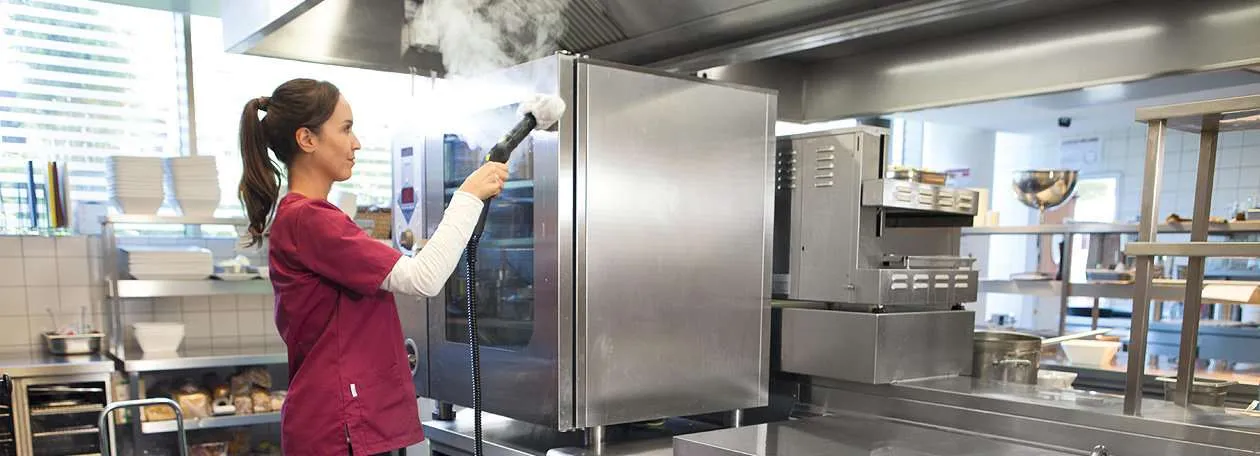
Imagine running a busy restaurant where the kitchen needs cleaning between service periods. If cleaning leaves equipment and surrounding surfaces saturated, staff may need additional time to remove excess water and prepare the area for use. Steam can offer a more controlled approach, particularly for suitable stainless-steel surfaces, fixtures and grease-prone areas. The result? Cleaning tasks may be completed with less residual moisture and reduced disruption. Of course, surfaces must still be allowed to cool, dry and become safe before normal operations resume.
Reducing Slip Hazards
Wet floors are a common concern in workplaces, especially where staff and customers move frequently. Using less water can help limit the amount of residual liquid on suitable flooring, but it doesn’t remove slip risks completely. Steam may condense on cooler surfaces, and loosened grease or dirt can temporarily make floors slippery. Appropriate warning signs, surface drying and safe cleaning procedures remain essential.
Can Steam Cleaning Reduce Chemical Use?

Many businesses rely on detergents, degreasers and disinfectants to maintain their premises. These products have important roles, but excessive or unnecessary chemical use can increase costs, storage requirements and handling responsibilities. Steam cleaning offers an alternative for many routine cleaning tasks because heat helps loosen contamination without always requiring additional cleaning agents.
Cleaning With Water Alone
For suitable applications, steam can help remove everyday grime, soap residue and grease using water alone. This may reduce the need for certain chemical cleaning products and the associated packaging. It can also simplify some cleaning routines by reducing the number of products operators need to handle. However, steam is not a universal replacement for detergents or disinfectants. Certain soils, surfaces and hygiene requirements still call for specialist cleaning chemicals.
Supporting More Sustainable Cleaning Practices
Reducing unnecessary chemical consumption can contribute to a business’s wider environmental objectives. Potential benefits include lower chemical purchasing requirements, less packaging waste and reduced handling of cleaning solutions. There are trade-offs to consider, though. Steam cleaners consume electricity or another energy source to heat water, and their environmental impact depends partly on machine efficiency and how they are used. A sustainable cleaning strategy considers water, energy, chemicals, equipment lifespan and cleaning effectiveness together.
The Role of Steam in Hygiene and Sanitisation

A surface can look spotless while still harbouring microorganisms. That’s why visual cleanliness and hygienic cleanliness aren’t necessarily the same thing. Steam cleaning can support hygiene by combining physical soil removal with heat exposure.
How Heat Affects Microorganisms
High temperatures can damage microorganisms, including certain bacteria, viruses and fungi. However, the temperature inside a steam cleaner’s boiler is not necessarily the temperature experienced by microorganisms on the surface. Heat is lost as steam travels through attachments and contacts cooler materials. Effective microbial reduction depends on the temperature actually achieved, exposure time, surface condition and the organisms involved.
Cleaning and Disinfection Are Different
Cleaning removes dirt, grease and other unwanted material. Disinfection involves reducing or inactivating microorganisms to a specified level. A steam cleaner may provide sanitising or disinfecting performance under particular tested conditions, but not every machine or cleaning technique can make that claim. Businesses requiring validated disinfection should choose equipment with relevant independent test evidence and follow the manufacturer’s instructions. This distinction is especially important in healthcare, food preparation and other hygiene-sensitive environments.
Why Steam Cleaning Is Useful in Commercial Kitchens

Commercial kitchens face demanding cleaning conditions. Cooking oils, food particles, grease and moisture can accumulate around equipment, particularly in joints, corners and other difficult-to-reach areas. Traditional cleaning often involves degreasers, scrubbing and repeated rinsing. Steam provides another way to tackle suitable kitchen surfaces.
Tackling Stubborn Grease
Heat helps soften greasy deposits, making them easier to remove with appropriate cleaning attachments. Steam can be particularly useful around suitable stainless-steel equipment, work surfaces and accessible fixtures. For example, operators may use steam to loosen grease around hob surrounds, extractor exteriors or equipment housings where the manufacturer permits it. The loosened grease must then be wiped or extracted away.
Reaching Awkward Areas
Not every kitchen surface is conveniently flat. Small gaps, textured surfaces and equipment joints can collect contamination that ordinary cloths struggle to reach. Precision steam nozzles and brushes allow operators to direct heat into suitable confined areas. However, electrical components, sensitive seals and inaccessible internal equipment parts must be protected. Always follow equipment-specific cleaning instructions.
Steam Cleaning in Bathrooms and Washrooms

Commercial washrooms experience constant use, making regular cleaning essential. Soap residue, body oils, limescale and dirt can accumulate around taps, basins, tiles and sanitary fixtures. Steam cleaning can help tackle several of these problems.
Cleaning Tiles and Grout
Grout lines are particularly prone to collecting dirt because their textured surfaces can trap deposits. Steam helps loosen accumulated grime, while suitable brushes provide the mechanical action needed to remove it. This can improve the appearance of tiled areas without relying solely on aggressive scrubbing. However, damaged grout, unsealed materials and certain adhesives may be vulnerable to heat or moisture.
Removing Soap Residue
Soap scum can form a stubborn film on shower screens, tiles and fixtures. Heat can help soften some of these deposits, making them easier to wipe away. Mineral limescale is different. Heavy calcium deposits may still require an appropriate descaling product because steam alone does not chemically dissolve mineral build-up. Understanding the difference helps operators choose the most effective cleaning method.
Is Steam Cleaning Suitable for Upholstery and Fabrics?
Soft furnishings can be difficult to maintain because they absorb moisture and may take considerable time to dry. Professional steam cleaning can be useful for certain heat-tolerant fabrics, particularly when paired with appropriate upholstery attachments or extraction systems.
Refreshing Suitable Upholstery
Steam may help loosen surface dirt and residues from compatible upholstery materials. Its effectiveness depends on fabric composition, construction and the manufacturer’s cleaning recommendations. Some fabrics can shrink, lose colour, develop water marks or suffer damage when exposed to heat and moisture. Always check the upholstery care label and test an inconspicuous area before proceeding.
Why Moisture Control Is Important
Excessive wetting can cause problems in upholstered furniture, especially when moisture reaches internal padding. This can extend drying times and potentially contribute to odours or microbial growth if materials remain damp. Low-water delivery can help manage these risks, but it doesn’t guarantee that upholstery will remain dry. For heavily soiled furnishings, extraction equipment may still be necessary to remove suspended dirt effectively.
Cleaning Floors Without Excessive Water

Different flooring materials require different cleaning approaches. A method suitable for ceramic tiles may be completely inappropriate for untreated timber, laminate or certain resilient floor coverings. Steam cleaning can be effective on selected hard, heat-resistant flooring when the flooring manufacturer approves its use.
Hard Floors and Textured Surfaces
Textured floors can trap dirt in small grooves that ordinary mopping may not reach easily. Steam, combined with suitable brushes or floor attachments, can help loosen contamination from these areas. This can be particularly useful in commercial environments where dirt accumulates through frequent foot traffic.
Protecting Sensitive Flooring
Not all floors tolerate steam. Heat and moisture can damage certain adhesives, coatings, joints and flooring materials. Some laminate, engineered wood and luxury vinyl flooring manufacturers specifically advise against steam cleaning. Businesses should always verify surface compatibility rather than assuming that every hard floor is steam-safe.
Check out our range of dry steam cleaners!
Why Steam Cleaning Can Benefit Public Facilities

Public buildings often contain a mixture of high-touch surfaces, busy communal areas and difficult cleaning environments. Examples include leisure centres, transport facilities, schools, offices and public washrooms. Steam cleaning can provide a useful addition to established cleaning routines where surfaces and equipment are compatible.
Cleaning Frequently Used Fixtures
Door handles, handrails, taps and other frequently touched fixtures require regular attention. Steam may assist with cleaning certain heat-resistant fixtures, provided moisture-sensitive components and surrounding materials are protected. Where formal disinfection is required, businesses must use a validated method that meets their hygiene obligations.
Maintaining Outdoor Fixtures
Public bins, waste containers and other outdoor fixtures can accumulate sticky residues, grease and unpleasant deposits. Steam can help soften and remove some of this contamination. For waste containers, cleaning effectiveness depends on material compatibility, access to contaminated areas and appropriate removal of loosened waste. Steam cleaning may form part of a wider cleaning process rather than replacing pressure washing or specialist waste-handling procedures entirely.
How Steam Cleaning Helps With Hard-to-Reach Areas

Some of the dirtiest places in a building are also the most awkward to access. Think about the narrow space behind a tap, the edge of a kitchen appliance or the grooves surrounding a tiled fixture. These areas can become miniature dirt traps. Steam cleaning equipment often includes specialised attachments designed to improve access.
Precision Nozzles
Narrow nozzles direct steam towards confined spaces, helping operators target deposits more precisely. They can be useful around suitable joints, edges and crevices.
Brushes and Detail Attachments
Brush attachments combine heat with mechanical agitation. This helps remove deposits that steam alone may only soften. Different brush materials suit different surfaces, so choosing the correct attachment is important to avoid scratching or damage.
Cloth and Extraction Attachments
Loosened dirt needs somewhere to go. Cloth-covered attachments can collect contamination during cleaning, while extraction systems remove moisture and suspended residues. The right attachment can make a substantial difference to both cleaning quality and working efficiency.
The Importance of Choosing the Right Steam Cleaner

Not all steam cleaning machines are designed for the same purpose. A compact domestic cleaner may be suitable for occasional household tasks, while a commercial operation may require a machine capable of sustained daily use. Choosing equipment should involve more than comparing the highest advertised temperature.
Boiler Capacity and Continuous Operation
Boiler capacity and water refill arrangements influence how long a machine can operate before interruption. Some professional models support continuous refilling, allowing operators to work for extended periods without waiting for the boiler to cool. For businesses with large cleaning areas, this can be particularly valuable.
Steam Pressure and Output
Pressure helps deliver steam through attachments, while steam output influences the amount of vapour available during cleaning. Higher pressure isn’t automatically better. Different applications require different combinations of heat, flow, pressure and mechanical action. A machine with adjustable output can offer greater flexibility when moving between cleaning tasks.
Attachments and Surface Compatibility
The accessories supplied with a machine should match the work being undertaken. For example, a business primarily cleaning commercial kitchens may need different attachments from one maintaining tiled washrooms or upholstery. Choosing suitable accessories helps operators work efficiently while protecting surfaces.
Understanding the Costs of Steam Cleaning

Investing in professional cleaning equipment involves an initial purchase cost, but the purchase price is only part of the picture. Businesses should also consider running costs, maintenance requirements, staff time and expected equipment lifespan.
Potential Savings on Cleaning Products
Where steam successfully replaces chemical-based cleaning steps, businesses may reduce spending on certain detergents and degreasers. The size of any saving depends on how frequently the equipment is used and which cleaning products remain necessary.
Labour Efficiency
Cleaning labour is often a significant operating expense. If steam helps operators loosen stubborn contamination more quickly, it may reduce time spent scrubbing or repeating cleaning tasks. However, this should be assessed through practical trials rather than assumed. Preparation, residue removal, equipment maintenance and drying all contribute to total cleaning time.
Equipment Maintenance
Professional steam cleaners need routine care. Depending on the machine and water supply, this may include descaling, inspecting seals, cleaning attachments and replacing consumable components. Following the manufacturer’s maintenance schedule helps protect performance and extend equipment life.
Common Mistakes to Avoid When Steam Cleaning

Even professional equipment can produce disappointing results when used incorrectly. Understanding a few common mistakes can help businesses achieve more consistent cleaning outcomes.
Using Steam on Unsuitable Materials
Heat-sensitive plastics, untreated timber, delicate fabrics and certain adhesives may be damaged by steam. Always check compatibility before cleaning unfamiliar materials.
Assuming Steam Automatically Disinfects
High boiler temperatures do not guarantee disinfection at the surface. Only make sanitisation or disinfection claims when the equipment and method have appropriate supporting evidence.
Forgetting to Remove Loosened Dirt
Steam loosens contamination, but it doesn’t necessarily remove it. Wiping, brushing or extraction is still required to achieve a properly cleaned surface.
Neglecting Operator Safety
Steam can cause serious burns. Operators should use appropriate protective equipment, avoid directing steam towards people and follow safe handling procedures. Electrical equipment, pressurised components and hot attachments also require particular care.
How to Introduce Steam Cleaning Into Your Business

Adopting a new cleaning method doesn’t mean replacing every existing procedure overnight. A more practical approach is to identify where steam could deliver the greatest benefit. Start with areas where stubborn grease, textured surfaces or excessive water use make cleaning difficult. Then assess whether steam is suitable for the surfaces and contamination involved.
Trial the Equipment on Real Cleaning Tasks
A demonstration using your own cleaning challenges can be more informative than relying solely on product specifications. Consider how effectively the equipment removes contamination, how long the task takes and whether the surface needs additional drying or wiping. This provides a clearer picture of its practical value.
Train Staff in Correct Techniques
Operator technique plays a major role in cleaning performance. Staff should understand suitable attachments, safe working distances, surface compatibility and appropriate steam exposure. Training should also cover burn prevention, electrical safety and correct maintenance procedures.
Review Cleaning Procedures
Once equipment has been trialled, businesses can update relevant cleaning procedures to reflect its capabilities and limitations. This may involve adjusting cleaning frequencies, reducing certain chemical applications or introducing steam for specific maintenance tasks.
Choosing Professional Steam Cleaning Equipment From Pure Steam Cleaners

When selecting commercial cleaning equipment, it’s worth considering how the machine will perform in everyday working conditions. A restaurant may prioritise grease removal and compact attachments. A facilities management company might need versatility across multiple buildings, while a specialist cleaning contractor may require durable equipment capable of frequent operation. The right choice depends on the work, not simply the largest machine or highest specification. At Pure Steam Cleaners, businesses can explore professional steam cleaning solutions for their cleaning requirements.
What to Consider Before Buying
Before investing, think about the surfaces you’ll clean, the amount of daily use you expect and the practical limitations of your working environment. Consider water capacity, power requirements, steam output, available attachments and ongoing maintenance. It is also worth checking whether the machine has evidence supporting any specific hygiene or disinfection claims you require.
Finding a More Efficient Cleaning Method
The value of low-moisture steam cleaning lies in using heat and controlled water delivery to tackle suitable cleaning tasks without unnecessary saturation. For businesses looking to improve cleaning efficiency, reduce reliance on certain chemicals and maintain demanding commercial environments, professional steam equipment can be a worthwhile option. Explore the range of cleaning solutions available at Pure Steam Cleaners to find equipment suited to your business and the surfaces you need to maintain.
Check out our range of dry steam cleaners!
Pure Steam Cleaners specialises in hiring and selling powerful, self-descaling commercial and industrial dry steam cleaners. Our machines are ideal for deep cleaning in kitchens, healthcare facilities, and manufacturing plants without harsh chemicals. Hires and sells new and second-hand cleaning equipment, including industrial vacuums, floor scrubbers, pressure washers, and floor polishers at Cleaning Equipment Services Ltd. We’re always available to answer any questions and provide guidance on the best cleaning methods and procedures. We’re also very patient and accommodating with explaining the operation and maintenance of the equipment.

Leave a Reply
You must be logged in to post a comment.