
Commercial & Industrial Steam Cleaners | Pure Steam Cleaners.uk


Grease has a talent for turning a straightforward cleaning job into a sticky little nightmare. It clings to floors, machinery, kitchen equipment and awkward corners, often getting worse when repeatedly wiped rather than properly broken down. The reason steam works so well is not magic. Steam’s grease-busting power comes from the combined effect of heat, moisture, pressure and mechanical action. When those forces meet a greasy surface, they can soften, loosen and lift contamination far more effectively than cold water alone.
Check out our range of steam cleaners!
Key Takeaways
- Steam’s grease-busting power comes from heat softening grease and helping it release from surfaces.
- Pressure helps drive hot steam into cracks, joints and stubborn deposits.
- Low-moisture steam can clean effectively without flooding the working area.
- Steam can reduce the need for chemical degreasers in many commercial cleaning tasks.
- The right steam pressure, temperature and steam volume matter when cleaning heavy grease.
Why does grease become so difficult to remove?

Grease is not simply dirt with a bad attitude. It is a mixture of oils, fats and other substances that can bond to surfaces and trap dust, food particles and grime. Once heated, splashed and spread across a working area, it can form a stubborn film that ordinary wiping struggles to remove.
This is why a greasy surface can look clean after a quick wipe while still feeling tacky. You have moved the grease around rather than actually breaking it down. Steam approaches the problem differently. Instead of relying on friction alone, it brings heat directly to the contamination.
How does heat break down grease?

Heat is one of the main reasons steam is so effective against greasy deposits, and it is central to steam’s grease-busting power. Many fats and oils become less viscous as their temperature rises. In simple terms, they become softer and easier to move.
Think about butter straight from the fridge compared with butter sitting on a warm worktop. The butter has not changed its identity, but its behaviour has changed dramatically. Grease responds in much the same way. Steam heats the deposit, softening it so it can be lifted from the surface.
This is the foundation of steam’s grease-busting power. The heat does much of the initial heavy lifting before the operator even starts wiping.
What does steam temperature actually do?

Temperature gives steam its cleaning punch. Water at room temperature can wash away loose dirt, but it does not have the same effect on baked-on grease. Hot steam transfers thermal energy to the surface and contamination very quickly.
Our commercial and industrial steam cleaners produce high-temperature steam designed for demanding cleaning work. Some Pure models operate at around 165°C within the boiler, with pressure helping deliver the steam to the point of cleaning.
The key point is that pressure alone is not enough. A machine can advertise an impressive bar rating, but the volume and temperature of steam being delivered also matter. You need heat at the surface, not an impressive number sitting on a specification sheet looking pleased with itself.
Why does pressure help remove stubborn grease?
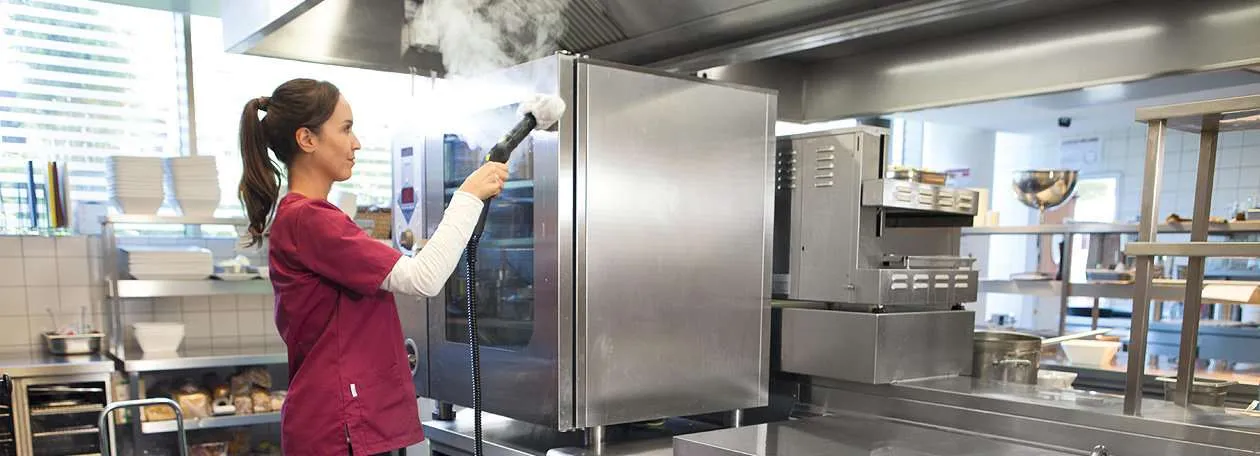
Pressure gives steam a mechanical advantage. As steam exits through a nozzle, it hits the contaminated surface with force. That action helps disturb loosened grease and push into small gaps where cloths and brushes may struggle to reach.
Pressure becomes particularly useful around machinery, hinges, edges, textured flooring and equipment where grease collects in awkward places. Once heat has softened the contamination, the pressure helps shift it.
This is another part of steam’s grease-busting power. Heat softens the problem, while pressure helps move it.
Does steam dissolve grease or simply loosen it?

Steam can soften and emulsify greasy deposits, making them much easier to remove. It does not mean every type of grease instantly disappears into thin air. Cleaning still involves removing the loosened contamination from the surface.
That distinction matters in professional cleaning. A steam cleaner is not a wand that makes physics take the day off. The operator still needs the right accessory, technique and collection method for the job.
For heavier deposits, a brush can agitate the softened grease while the steam continues applying heat. A cloth or vacuum system can then collect the residue.
Why is steam volume important?

Pressure tells you how forcefully steam can be delivered. Steam volume tells you how much steam the machine can produce over time. Both matter.
Imagine trying to fill a bucket with a drinking straw. The pressure at the end might be impressive if you are particularly optimistic, but the supply is still limited. Cleaning heavy grease requires a machine capable of maintaining useful steam output during the task.
Our industrial machines are designed for professional applications where continuous cleaning performance matters. For demanding grease removal, steam volume can make the difference between a machine that keeps working and one that spends too much time recovering.
What happens when steam meets a greasy surface?
When hot steam contacts grease, several things happen at once. Heat raises the temperature of the deposit. The grease becomes softer and less resistant to movement. Moisture can help loosen contamination from the surface. Pressure adds mechanical force.
That combination makes steam’s grease-busting power more than a simple hot-water effect. The cleaning action comes from several forces working together.
It is a bit like persuading a stubborn jar lid to open. Heat can expand it, grip gives you traction and force gets the job finished. Steam cleaning uses a similar team effort, only with considerably less swearing at the jar.
Can steam reach grease in cracks and awkward spaces?
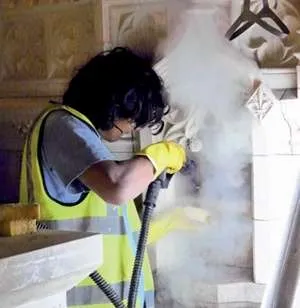
Yes, and this is one of its practical advantages. Grease rarely stays politely on a flat, open surface. It finds seams, corners, joints, grooves, vents and the spaces around equipment.
A focused steam nozzle can direct heat and pressure into these areas. The steam can reach places that a mop head or cloth simply cannot access.
This makes steam useful for cleaning equipment, production areas, kitchen surfaces, transport interiors and other environments where contamination collects around edges and fittings.
Why does low moisture matter when removing grease?
Not all steam cleaning creates the same amount of water. Dry steam contains relatively little moisture compared with conventional wet cleaning methods. That means you can apply substantial heat without soaking the working area.
For businesses, this can be a major practical advantage and another reason steam’s grease-busting power matters in busy workplaces. Excess water can create its own problems, especially around electrical equipment, machinery, flooring and areas that need to return to service quickly.
Our dry steam cleaners are designed to use minimal water while delivering high-temperature steam. That helps make the cleaning process more controlled.
Does steam replace chemical degreasers?

Steam can reduce or remove the need for chemical degreasers in many applications, but the exact approach depends on the contamination and surface. Heavy, old or specialised deposits may still require a different treatment.
The attraction is straightforward. When heat can soften and lift grease, you may not need to reach for a strong chemical every time a surface looks dirty.
That can simplify chemical handling and reduce residue left behind after cleaning. It also means operators can focus on the contamination itself rather than covering everything in a chemical solution and hoping for the best.
How does steam compare with hot water?

Hot water already has an advantage over cold water because heat helps loosen grease. Steam takes that principle further by delivering much higher temperatures with far less water.
A traditional hot-water approach can leave a large amount of liquid behind. Steam can deliver heat directly to the contamination while using a relatively small amount of moisture.
That is why steam’s grease-busting power can be particularly useful in commercial and industrial environments where excessive water is inconvenient.
Why is steam useful in commercial kitchens?
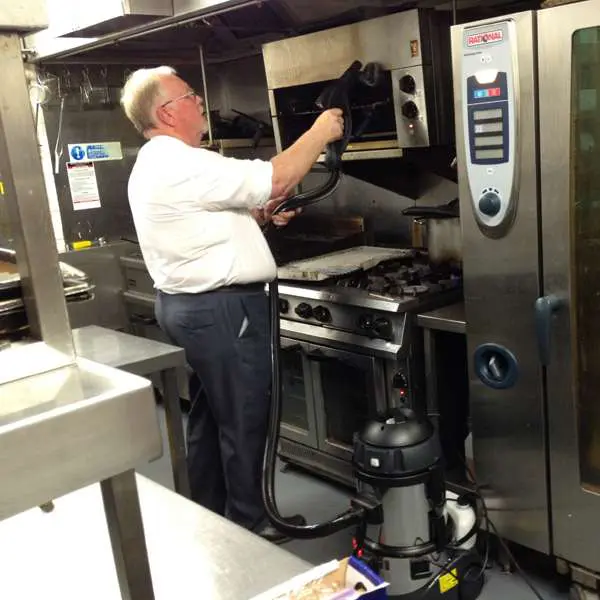
Commercial kitchens are full of grease-producing activities. Fryers, extraction areas, ovens, splashbacks, floors and equipment can accumulate oily deposits quickly.
Steam can heat and soften these deposits, allowing them to be agitated and removed. With the right accessories, operators can work around equipment, edges and difficult areas without relying entirely on manual scrubbing.
Steam cleaning can also be useful between routine deep cleans. Instead of allowing grease to build into a thick layer that seems determined to become part of the building, regular steam cleaning can help keep contamination under control.
Can steam clean grease from industrial machinery?

It can be highly useful for machinery and equipment, provided the surface and components are suitable for steam cleaning. Industrial environments often contain a mixture of oils, grease, dust and process residue.
The advantage is the ability to apply heat directly to contaminated areas without introducing large volumes of water. This can make cleaning around machinery more practical, especially where drying time matters.
Our industrial steam cleaners are built for demanding environments and can be used across a wide range of commercial and industrial applications. The correct accessories and cleaning method should always be selected for the equipment involved.
Does steam pressure alone determine cleaning power?

No. This is one of the biggest misunderstandings around professional steam cleaning. A higher bar figure does not automatically mean a better cleaning result.
You need to look at the complete cleaning system. Temperature, pressure, steam volume, boiler design, recovery time and the accessory being used all influence what happens at the surface.
That is why steam’s grease-busting power should be judged by how effectively a machine delivers usable steam during real cleaning work, rather than by one specification in isolation.
How does the operator affect steam cleaning results?
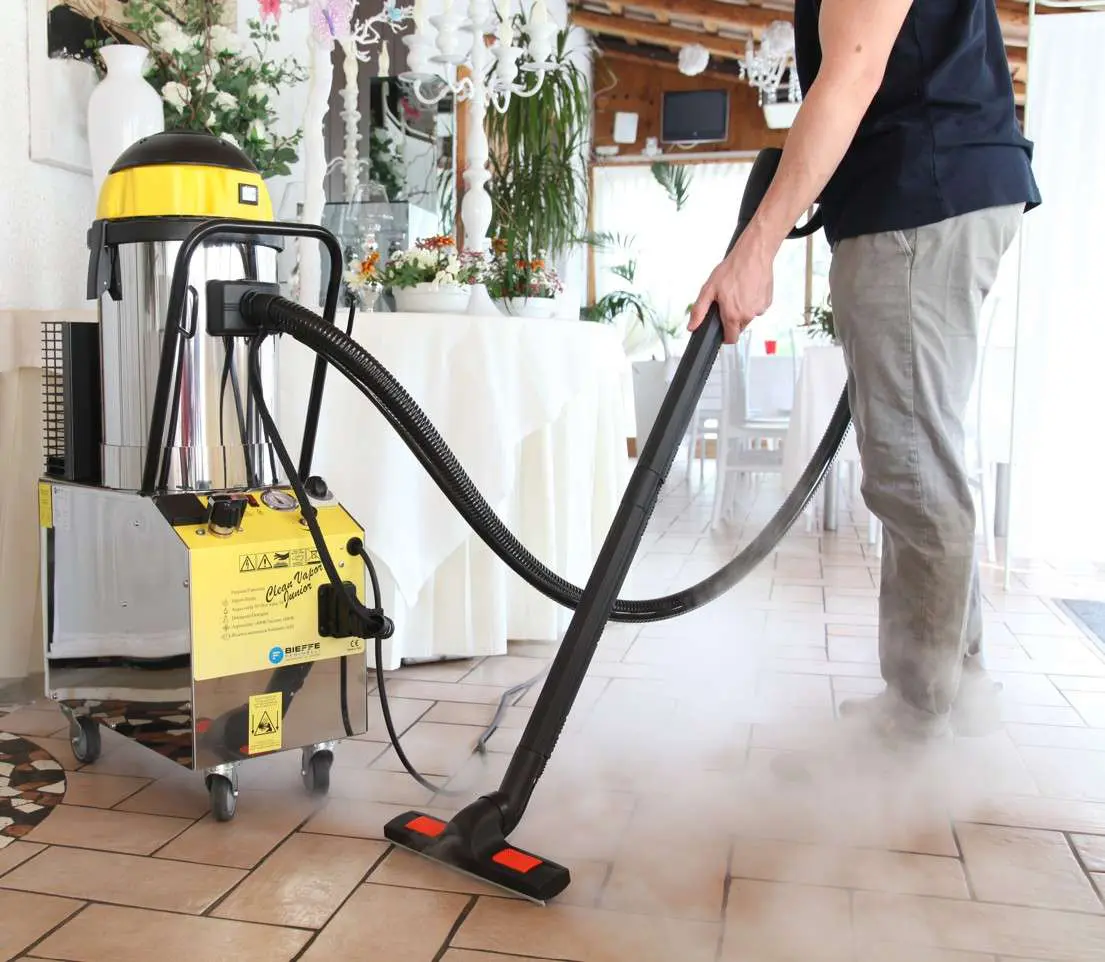
Technology helps, but technique still matters. The operator controls the distance from the surface, speed of movement, steam flow and accessory used.
For thick grease, holding the nozzle in one place for a few seconds can allow heat to penetrate the deposit. Moving too quickly may skim over the contamination without giving the steam enough time to work.
For lighter films, a faster pass may be enough. The trick is to adjust the technique to the surface rather than treating every greasy patch as though it has personally offended you.
Check out our range of steam cleaners!
Why do accessories matter when removing grease?

The steam machine produces the heat and pressure, but the accessory controls how those forces are applied. Brushes can agitate softened deposits. Concentration nozzles can direct steam into narrow areas. Larger heads can cover wider surfaces.
Choosing the right tool can therefore make a noticeable difference to the cleaning result. A powerful machine paired with the wrong accessory is a little like buying a sports car and fitting it with shopping trolley wheels.
Our steam cleaners are supplied with cleaning tools designed for different applications, helping businesses adapt the machine to the job rather than forcing one attachment to do everything.
What makes Pure Steam Cleaners suited to grease removal?

We design and supply commercial and industrial steam cleaners for professional cleaning applications where heat, steam output and reliability matter. Our machines use self-descaling boiler technology, which helps reduce the build-up of limescale that can affect steam equipment over time.
Our industrial range includes machines with high steam pressure, adjustable steam flow and extended operating capability. The aim is simple: give professional cleaners the steam they need to tackle stubborn dirt and grease without making the cleaning process unnecessarily complicated.
The combination of high temperature, controlled moisture, pressure and suitable accessories is what gives steam’s grease-busting power its practical value.
How does self-descaling help maintain steam performance?

Limescale is the uninvited guest of water-heating equipment. It can build up inside conventional boilers and interfere with heating and performance.
Our patented self-descaling boiler design is intended to prevent the boiler from clogging with limescale in the same way conventional systems can. That matters because a steam cleaner needs to keep producing steam reliably.
Good grease removal depends on consistent heat and steam delivery. A machine that struggles to maintain performance is not much use when the grease is having a particularly productive day.
Where can steam’s grease-busting power be used?

The applications are broad. Food processing areas, commercial kitchens, manufacturing facilities, automotive interiors, healthcare environments, hospitality, transport and many other workplaces can benefit from high-temperature steam cleaning.
The important point is to match the machine and cleaning method to the surface, contamination and working conditions. Some materials are heat-sensitive, and some equipment requires specific precautions.
Used correctly, steam gives businesses a way to tackle greasy contamination with less water and fewer chemicals in many cleaning situations.
Why does steam work so well on baked-on grease?

Baked-on grease is difficult because repeated exposure to heat can make oily contamination more firmly attached to a surface. Wiping it with cold water usually achieves very little.
Steam changes the temperature of the deposit quickly. As the grease softens, it becomes easier for brushes and other tools to break it away from the surface.
This is where steam’s grease-busting power becomes especially noticeable. Instead of fighting a hard, sticky layer with brute force alone, you are changing its physical behaviour first.
What should businesses look for in a steam cleaner?

Start with the cleaning task rather than the machine brochure, because steam’s grease-busting power is only useful when the machine suits the job. How often will the cleaner be used? What type of grease are you removing? How large are the areas? Do you need continuous steam? Is water usage a concern? Are there awkward spaces or machinery to clean?
Then look at steam pressure, steam production, temperature, boiler capacity, water supply, accessories and operating time. A commercial machine may suit lighter use, while an industrial model can be more appropriate for frequent, heavy-duty cleaning.
If you are unsure which machine fits your application, we can help you choose. The right steam cleaner should make the job easier, not give you another complicated piece of equipment to worry about.
Why does steam make sense for professional grease cleaning?

Grease is stubborn because it sticks, spreads and collects where you least want it. Steam attacks the problem through heat, pressure and controlled moisture, helping soften contamination before it is physically removed.
That is the science behind steam’s grease-busting power. It is not one magic ingredient. It is the way heat, steam volume, pressure, moisture and cleaning technique work together.
For professional cleaning teams, that combination can mean less scrubbing, less water and fewer chemicals across suitable applications. When the right machine is matched to the right task, even stubborn grease has to reconsider its career choices.
Check out our range of steam cleaners!
Pure Steam Cleaners specialises in hiring and selling powerful, self-descaling commercial and industrial dry steam cleaners. Our machines are ideal for deep cleaning in kitchens, healthcare facilities, and manufacturing plants without harsh chemicals. Hires and sells new and second-hand cleaning equipment, including industrial vacuums, floor scrubbers, pressure washers, and floor polishers at Cleaning Equipment Services Ltd. We’re always available to answer any questions and provide guidance on the best cleaning methods and procedures. We’re also very patient and accommodating with explaining the operation and maintenance of the equipment.
