
Commercial & Industrial Steam Cleaners | Pure Steam Cleaners.uk


Cross-contamination is the kitchen equivalent of office gossip. One tiny mistake travels quickly and suddenly everyone has a problem. In commercial kitchens, food factories, cafés, hotels, and catering businesses, contamination can wreck reputations faster than an overcooked steak on a Friday night service. That is exactly why steam cleaning solves cross-contamination in food prep so effectively.
Traditional cleaning methods often move bacteria around instead of removing it properly. A cloth gets reused, mop water becomes suspiciously grey, and someone insists a quick wipe “will do”. Steam cleaning changes that entirely. High-temperature steam attacks grease, bacteria, mould, and residue without leaving chemical traces behind. It cleans deep into cracks and surfaces where harmful microbes like to hide like awkward guests who never leave the party.
Check out our range of steam cleaners!
Key Takeaways
- Steam cleaning kills bacteria using high heat rather than relying heavily on chemicals
- steam cleaning solves cross-contamination by reaching difficult food prep areas
- Dry steam reduces moisture, lowering the risk of bacterial growth after cleaning
- Commercial kitchens save time and reduce chemical usage with steam systems
- Staff can clean more consistently without needing a chemistry degree
Why Is Cross-Contamination Such A Serious Problem?

Cross-contamination happens when harmful bacteria or allergens spread from one surface, ingredient, or piece of equipment to another. Raw chicken juices on a chopping board are the classic culprit. It is practically the celebrity of food safety training.
But contamination is not limited to meat. Dairy, seafood, gluten, nuts, and even cleaning cloths can transfer dangerous particles across workspaces. In business settings, one mistake can lead to food poisoning complaints, failed inspections, legal costs, and terrible reviews online. Nobody wants their café discussed in local Facebook groups for the wrong reasons.
This is why steam cleaning solves cross-contamination better than many traditional cleaning systems. It targets the contamination source rather than simply spreading it around with wipes and sprays.
How Does Steam Cleaning Actually Work?

Steam cleaning uses heated water vapour at high pressure to sanitise surfaces. The steam reaches temperatures hot enough to kill many bacteria, viruses, mould spores, and pathogens on contact.
Unlike soaking surfaces with buckets of chemicals, steam cleaning uses minimal moisture. That matters because damp environments encourage bacterial growth. A wet cloth left in a kitchen overnight has the charm of a biology experiment.
Dry steam systems are especially effective in food prep areas because they clean and sanitise at the same time. Heat penetrates tiny crevices where bacteria hide, including grout lines, machine edges, drain covers, and worktops.
That is one reason steam cleaning solves cross-contamination in spaces where ordinary wiping simply cannot reach.
Why Are Traditional Cleaning Methods Falling Short?

Many kitchens still rely on sprays, detergents, and cloths. The problem is consistency. One staff member follows procedure carefully. Another gives the counter a five-second wipe while thinking about lunch.
Chemical cleaners also come with challenges:
- Residue left behind on food prep surfaces
- Strong odours
- Chemical storage requirements
- Risk of improper dilution
- Staff training issues
- Recontamination from dirty cloths
Steam reduces many of these problems. It uses heat as the main cleaning force rather than endless chemicals. The process is simpler, cleaner, and harder to fake during a rushed shift.
Most importantly, steam cleaning solves cross-contamination by removing grease and bacteria together instead of treating them as separate jobs.
Which Areas In Food Prep Benefit Most From Steam Cleaning?

Food preparation environments are packed with awkward corners and hard-to-clean equipment. Steam works particularly well in areas where grease builds up or bacteria gather quietly like they are paying rent.
Worktops And Food Preparation Surfaces
Counters come into contact with raw ingredients all day. Steam sanitises surfaces quickly without leaving chemical residue behind.
Chopping Boards
Plastic and wooden boards develop tiny cuts where bacteria settle. Steam penetrates those grooves more effectively than wiping alone.
Grout And Tiles
Tiles may look clean until you inspect the grout. Steam blasts grime from porous surfaces that ordinary mopping barely touches.
Ovens And Hobs
Grease attracts dirt and bacteria. Steam loosens hardened buildup without excessive scrubbing.
Refrigeration Seals
Fridge door seals are famous for trapping moisture and mould. Steam reaches folds and edges with ease.
Extraction Systems
Kitchen ventilation collects grease surprisingly fast. Steam helps break down sticky residue before it becomes a fire risk.
In each case, steam cleaning solves cross-contamination by cleaning deeply rather than just improving appearances.
Can Steam Cleaning Reduce Chemical Usage?

Absolutely. Many food businesses are trying to cut down on harsh cleaning chemicals for health, environmental, and cost reasons.
Steam cleaning dramatically lowers chemical dependency because heat does much of the sanitising work. That means fewer bottles stored on-site and less risk of chemical contamination near food preparation zones.
Staff also spend less time mixing products incorrectly. Anyone who has watched someone eyeball disinfectant measurements knows this is not always an exact science.
Businesses using steamers from Pure Steam Cleaners often reduce both cleaning product purchases and labour time.
Does Steam Cleaning Help With Food Safety Audits?

Food safety inspections are stressful enough without worrying whether someone forgot to sanitise a prep table properly.
Steam cleaning creates a more consistent hygiene process. Surfaces are sanitised using measurable heat rather than relying solely on manual wiping routines.
Inspectors look for cleanliness in difficult areas, including:
- Corners
- Undersides of equipment
- Drainage points
- Extraction systems
- Tile grout
- Food contact surfaces
These are exactly the areas where steam cleaning solves cross-contamination most effectively.
A visibly cleaner kitchen also improves staff habits. People tend to maintain cleaner environments when the workspace already looks cared for. Human nature is funny that way. Nobody litters in a spotless hotel lobby, but one crisp packet in a car park seems to invite twenty more.
How Does Steam Cleaning Help With Allergen Control?

Allergens are one of the biggest concerns in modern food service. Tiny traces of nuts, dairy, shellfish, or gluten can trigger severe reactions.
Steam cleaning helps remove residue from surfaces and equipment without introducing additional chemicals into the environment. Since steam penetrates into seams and textured surfaces, it improves cleaning thoroughness between food preparation tasks.
For businesses handling multiple dietary requirements, steam cleaning solves cross-contamination by improving separation between preparation stages.
That matters enormously in cafés, bakeries, and restaurants serving allergy-sensitive customers.
Is Steam Cleaning Suitable For Small Kitchens?
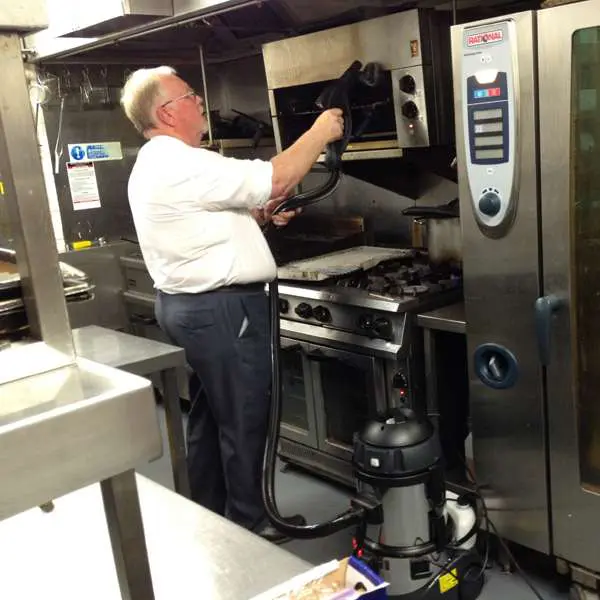
Some people assume steam cleaning is only practical for giant industrial kitchens. Not true.
Compact steam cleaners work well in smaller restaurants, cafés, mobile catering units, and pubs. In fact, smaller kitchens often benefit even more because limited space increases contamination risks.
When prep areas overlap, cleaning quality becomes critical. One cramped worktop can become a contamination hotspot very quickly.
Steam systems also reduce clutter because fewer cleaning chemicals are needed. That leaves more room for actual kitchen operations instead of rows of brightly coloured spray bottles pretending to look productive.
What About Food Manufacturing Facilities?

Food manufacturing sites face strict hygiene requirements and regular audits. Steam cleaning works especially well in these environments because it can sanitise machinery, conveyor systems, stainless steel surfaces, and production lines efficiently.
Dry steam reduces downtime because surfaces dry quickly after cleaning. Less moisture means lower risk of bacterial regrowth during production cycles.
This is another reason steam cleaning solves cross-contamination in large-scale operations where speed and hygiene must work together.
Does Steam Cleaning Save Time?

It usually does, especially once teams are trained properly.
Steam cleaning combines several tasks into one process:
- Degreasing
- Sanitising
- Odour removal
- Surface cleaning
Instead of spraying chemicals, waiting for dwell times, rinsing, and drying, steam often handles everything in a single pass.
Kitchen staff appreciate anything that shortens cleaning routines at the end of a shift. Morale drops sharply when someone announces the deep clean starts after midnight.
Can Steam Cleaning Improve Staff Hygiene Habits?

Yes, mainly because the process is easier to follow consistently.
Complicated cleaning routines fail when kitchens become busy. Staff skip steps, rush procedures, or improvise. Steam systems simplify the process. Point nozzle. Apply heat. Remove residue. Done.
When cleaning becomes straightforward, compliance improves naturally.
That simplicity matters because steam cleaning solves cross-contamination best when used regularly and consistently.
Is Steam Cleaning Environmentally Friendly?

Compared with heavy chemical cleaning, steam is a far greener option.
Steam systems use:
- Less water
- Fewer chemicals
- Reduced plastic packaging
- Lower chemical disposal requirements
Businesses trying to improve sustainability targets often see steam cleaning as a sensible upgrade rather than a trendy gimmick.
Clients notice these efforts too. Modern customers care about hygiene and environmental responsibility. They may not compliment your grout lines directly, but they definitely notice clean environments.
What Types Of Businesses Benefit Most?

Almost any food-related business can benefit from steam cleaning.
Restaurants
Busy kitchens need fast sanitising between prep sessions.
Hotels
Large catering operations require consistent hygiene standards.
Bakeries
Flour dust and allergen control become easier to manage.
Butchers
Raw meat preparation areas need deep sanitisation.
Food Factories
Production lines require efficient cleaning with minimal downtime.
Cafés
Small prep spaces demand high hygiene standards.
Across every sector, steam cleaning solves cross-contamination by improving both cleaning depth and consistency.
Check out our range of steam cleaners!
Does Steam Cleaning Help Prevent Odours?

Yes, because odours often come from trapped grease, bacteria, and organic residue.
Steam breaks down buildup hidden inside drains, seals, extraction systems, and porous surfaces. Removing the source of smells works far better than spraying lemon fragrance around and hoping for the best.
Nobody has ever walked into a kitchen and thought, “Lovely scent of artificial citrus masking old grease.”
Why Are More Businesses Switching To Steam Cleaning?

Businesses want cleaning methods that are:
- Faster
- Safer
- Easier to manage
- More reliable
- Less chemical-heavy
- Better for inspections
Steam ticks all those boxes while improving hygiene standards at the same time.
The real strength is consistency. steam cleaning solves cross-contamination because it removes many of the weak points created by manual cleaning methods.
That means fewer shortcuts, fewer contaminated cloths, and fewer risky surfaces left untreated.
Can Steam Cleaning Support HACCP Procedures?

Yes. HACCP plans depend heavily on proper cleaning controls.
Steam cleaning supports critical hygiene processes by helping teams sanitise surfaces thoroughly and consistently. It is especially useful for cleaning high-risk food contact points and difficult machinery components.
When cleaning standards become easier to maintain, HACCP compliance becomes less stressful too.
Which is good news for everyone except the clipboard enthusiast who enjoys pointing at tiny grease spots during inspections.
Why Does Heat Matter So Much In Food Hygiene?

Heat destroys many harmful microorganisms rapidly. Steam cleaning uses that principle directly.
Instead of relying solely on chemical reactions, steam attacks contamination physically through temperature and pressure. This creates a more direct sanitising process for food preparation environments.
That direct approach is exactly why steam cleaning solves cross-contamination so effectively across commercial kitchens and food production spaces.
How Does Steam Cleaning Affect Customer Confidence?

Customers may never see your cleaning routine, but they notice the results.
Clean kitchens improve:
- Food safety reputation
- Hygiene scores
- Staff presentation
- Customer trust
- Brand perception
One poor hygiene incident can spread online at frightening speed. A single review mentioning food poisoning can damage years of hard work.
Businesses adopting steam systems often view them as both a hygiene tool and a reputation safeguard. Because in food service, trust is fragile. A bit like supermarket sushi at petrol stations.
Check out our range of steam cleaners!
Pure Steam Cleaners specialises in hiring and selling powerful, self-descaling commercial and industrial dry steam cleaners. Our machines are ideal for deep cleaning in kitchens, healthcare facilities, and manufacturing plants without harsh chemicals. Hires and sells new and second-hand cleaning equipment, including industrial vacuums, floor scrubbers, pressure washers, and floor polishers at Cleaning Equipment Services Ltd. We’re always available to answer any questions and provide guidance on the best cleaning methods and procedures. We’re also very patient and accommodating with explaining the operation and maintenance of the equipment.
