
Commercial & Industrial Steam Cleaners | Pure Steam Cleaners.uk

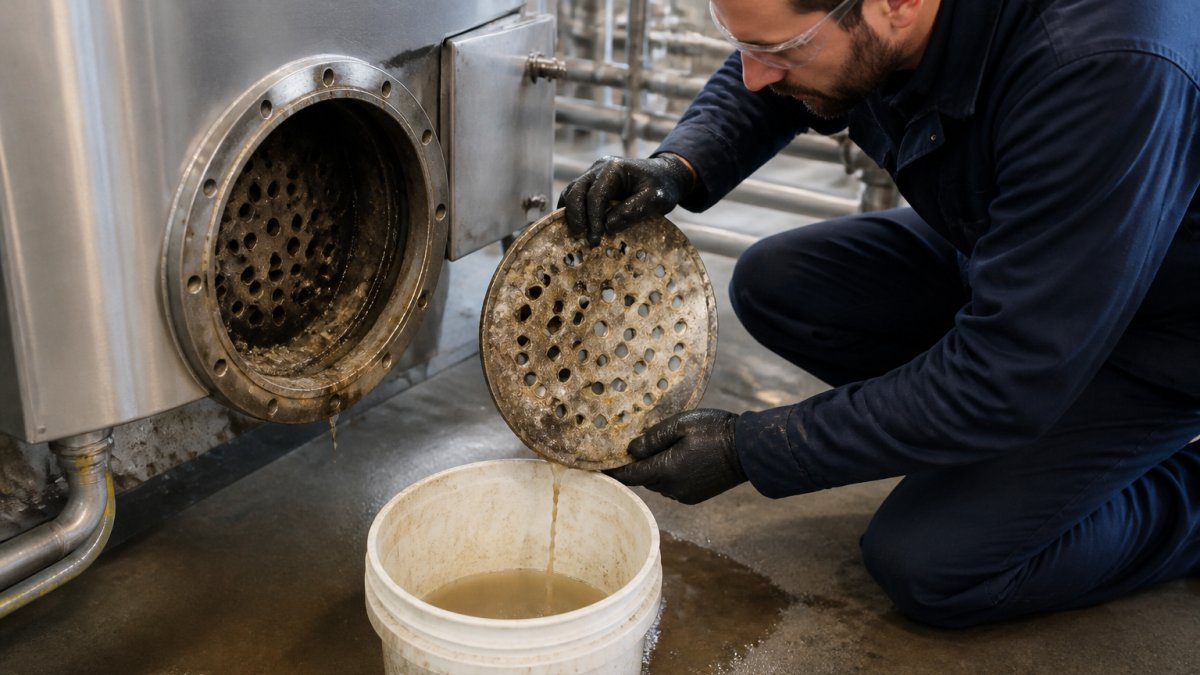
Table of Contents
- What You’ll Need Before You Start Descaling
- Signs of Limescale Build-Up in Steam Equipment
- Step-by-Step: How to Descale Commercial Steam Equipment
- Choosing the Best Descaling Solution for Industrial Boilers
- How to Prevent Scale in Commercial Steam Cleaners
- Building a Commercial Steamer Maintenance Schedule
- Common Descaling Mistakes to Avoid
- Frequently Asked Questions
Last Updated: 30 September 2026
What You’ll Need Before You Start Descaling
Learning how to descale commercial steam equipment starts with a simple truth: limescale is the single biggest killer of steam boilers in hard water areas. This guide walks you through the full process, from spotting the early warning signs to building a maintenance schedule that keeps your machine running for years.
Scale builds up quietly. By the time steam output drops or the boiler starts cutting out, the damage is often done.
Before you begin, gather the right kit. Descaling a commercial boiler is not a job you improvise.
- Food-safe or boiler-safe descaler suitable for your machine’s materials
- A clean container for draining and flushing water
- Soft brushes and lint-free cloths
- Personal protective equipment: gloves, goggles, apron
- The manufacturer’s service manual for your unit
- A service log to record what you did and when
Check your water hardness first. You can find this from your water supplier or a simple test kit. Hard water areas need more frequent descaling than soft water areas.
Never mix descaling chemicals with other cleaning products. Doing so can create dangerous fumes and damage the boiler’s internal surfaces.
Signs of Limescale Build-Up in Steam Equipment
The clearest signs of limescale build-up in steam equipment are reduced steam pressure, longer heat-up times, and a white or chalky residue around nozzles and fittings. If you spot any of these, scale has already taken hold.
Other warning signs include:
- Rattling or banging noises from the boiler
- Uneven steam flow from the nozzle
- Higher energy use for the same output
- Frequent cut-outs or pressure faults
- Visible crusting on heating elements
The earlier you catch these signs, the easier the descale will be. Left alone, scale hardens into a rock-like layer that no flush will shift. At that point, you are looking at a strip-down or a replacement boiler.
A common mistake is treating a drop in performance as normal wear. It rarely is. In most cases, it is scale.
Step-by-Step: How to Descale Commercial Steam Equipment
Descaling commercial steam equipment takes around 60 to 90 minutes for a standard unit, depending on how much scale has built up. Work through the steps below in order and do not rush the flush.
Step 1: Isolate, Depressurise and Drain
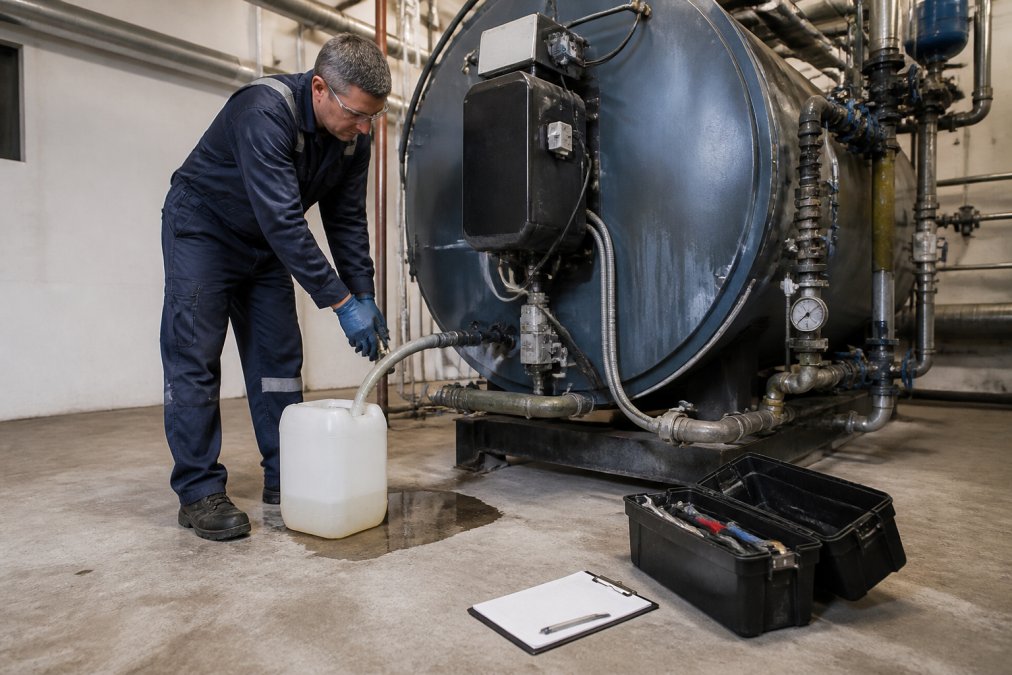
Switch off the machine and isolate it from the power and water supply. Let it cool fully before you touch anything.
Open the drain valve and empty the boiler into your container. Never drain a hot, pressurised boiler. Scalding water under pressure is a serious hazard.
Once drained, close the valve and check for any loose debris around the fittings. This is also a good moment to inspect seals and gaskets for wear.
Step 2: Circulate Descaler and Flush the System
Mix your descaler to the strength stated on the label or in the manual. Pour it into the boiler through the fill point.
Let it circulate or soak for the time the product recommends. Most descaling solutions need 20 to 40 minutes to break down scale. You may hear fizzing, which means the solution is working.
Drain the spent solution, then flush the boiler with clean water at least twice. Keep flushing until the water runs clear and free of residue.
Expected result: Steam output returns to normal, heat-up times drop, and the boiler runs quietly again.
Run a second short flush with clean water even if the first one looks clear. Traces of descaler left in the boiler can corrode internal parts over time.
Choosing the Best Descaling Solution for Industrial Boilers
The best descaling solution for industrial boilers is one formulated for your boiler’s specific materials, usually a citric-acid or sulphamic-acid based product for stainless steel and copper systems. Getting this wrong can pit the metal and void your warranty.
Match your solution to the job:
| Solution Type | Best For | Watch Out For |
|---|---|---|
| Citric acid | Stainless steel, light scale | Slower on heavy deposits |
| Sulphamic acid | Copper, aluminium | Needs careful rinsing |
| Phosphoric acid | Mixed-metal systems | Stronger odour, more PPE |
| Proprietary blends | Most commercial boilers | Check material compatibility |
Always check the manufacturer’s guidance before you buy. Some boilers require a specific formulation to keep the warranty valid.
For facilities that want to avoid the job altogether, self-descaling boiler technology now handles much of this work automatically. That is the approach Pure Steam Cleaners builds into its machines, which prevents limescale build-up for increased reliability, reducing the manual descaling burden for busy teams. Integrating advanced filtration systems alongside these automated units provides a comprehensive strategy to prevent scale buildup across all connected water heating infrastructure.
How to Prevent Scale in Commercial Steam Cleaners
Preventing scale in commercial steam cleaners comes down to three things: water treatment, regular flushing, and using equipment designed to resist build-up. Prevention is far cheaper than repair.
Start with your water. A water softener or filter removes much of the calcium that forms scale in the first place. This single change can cut your descaling frequency sharply.
Next, flush the boiler regularly, even when performance looks fine. A short weekly flush stops scale from hardening.
Finally, choose equipment with descaling built in. A patented self-descaling boiler, like the ones Pure Steam Cleaners supplies, tackles scale as part of normal operation, preventing limescale build-up for increased reliability. That means less downtime and fewer breakdowns.
- Fit a water softener if you are in a hard water area
- Flush the boiler weekly
- Use the right descaler at the right strength
- Log every descale so you can spot patterns
- Service the machine on schedule
Building a Commercial Steamer Maintenance Schedule
A commercial steamer maintenance schedule should combine daily checks, weekly flushes, and quarterly deep descales. The exact timing depends on your water hardness and how hard the machine works.
Use this as a starting point and adjust it to your site:
| Task | Frequency | Who Does It |
|---|---|---|
| Check steam output and pressure | Daily | Operator |
| Drain and flush the boiler | Weekly | Operator |
| Inspect seals and nozzles | Monthly | Maintenance |
| Full descale | Quarterly | Maintenance |
| Professional service | Annually | Engineer |
Keep a written log for every task. If an inspector or your insurer asks for proof of maintenance, that log is your evidence.
The single biggest factor in how often you descale is water hardness. Test it once, then set your schedule around the result rather than a fixed calendar.
Common Descaling Mistakes to Avoid
The most common descaling mistakes are using the wrong solution, skipping the flush, and descaling a hot boiler. Each one shortens the life of your machine.
Watch out for these:
- Using a household descaler on a commercial boiler
- Draining a pressurised or hot unit
- Leaving descaler in the boiler too long
- Flushing only once
- Ignoring the manufacturer’s material guidance
- Skipping the service log
Another mistake is waiting for a breakdown before acting. Scale does not reverse itself. The longer you leave it, the more it costs to fix.
If your machine keeps failing in a hard water area, the problem is usually the water, not the boiler. Fix the water and the breakdowns stop.
Frequently Asked Questions
How often should commercial steam equipment be descaled?
It depends on your water hardness and usage. In hard water areas, descale every one to three months; in soft water areas, every three to six months is often enough. Water softeners and regular blowdown can stretch those intervals. Check the heating element or sight glass monthly for early scale, and adjust your commercial steamer maintenance schedule to what you actually find rather than a fixed calendar.
What are the signs that my commercial steamer needs descaling?
Watch for longer heat-up times, weaker or sputtering steam, a rumbling boiler, higher energy use, white crust around fittings, and repeated pressure faults. The clearest signs of limescale build-up in steam equipment show up as reduced output for the same settings. If a job that once took five minutes now takes ten, scale is usually the cause. Book a descale before the boiler overheats and shuts down mid-shift.
Can I use vinegar to descale commercial steam equipment?
Vinegar is a mild acid, so it can loosen light scale on small parts, but it is not the best descaling solution for industrial boilers. It is slow on thick deposits, can corrode some metals with repeated use, and the smell lingers in food and care settings. Use a purpose-made descaler at the correct dilution and follow the maker’s instructions.
What happens if you don’t descale a steam boiler?
Scale insulates the heating element, so the boiler works harder, uses more energy and runs hotter than intended. Over time that leads to overheating, element or boiler failure, costly downtime and shortened machine life. In care homes and food plants, poor steam output can also undermine hygiene results. Descaling on schedule is far cheaper than replacing a boiler or losing a day’s production.
Limescale will always find a way into a steam boiler, but it does not have to dictate how often your equipment fails. Pure Steam Cleaners builds machines with patented self-descaling boiler technology, backed by 30 years of experience and a 3-year boiler guarantee, so your team spends less time descaling and more time working. Our Defra qualified equipment delivers chemical-free cleaning that stands up to the strictest hygiene checks. Get started with Pure Steam Cleaners and buy online today.
