
Commercial & Industrial Steam Cleaners | Pure Steam Cleaners.uk


Key Takeaways
- Steam systems cut through grime using heat and moisture, reducing the need for heavy chemical use and long wash cycles
- Less reliance on heated water and detergents means lower energy draw across cleaning operations
- Faster turnaround between production runs keeps equipment moving instead of sitting idle and being “reflective”
- Properly designed steam processes reduce water consumption and waste handling costs
- In modern facilities, steam cleaning boosts energy efficiency in food production by streamlining hygiene without overcomplicating it
Check out our range of steam cleaners!
What makes steam cleaning relevant in food production environments?
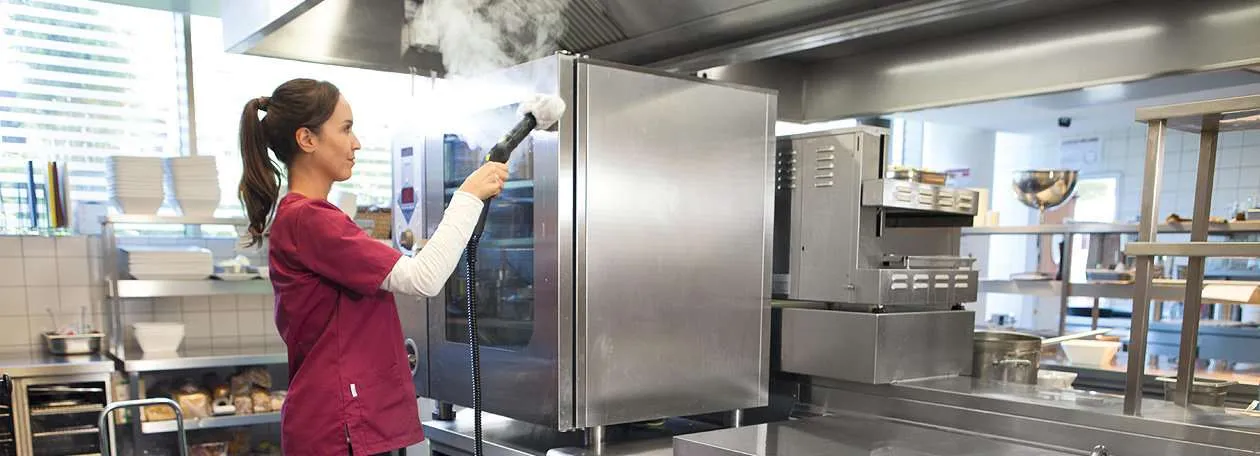
Food production spaces are not exactly forgiving places. You get grease, protein build-up, sticky residues that seem personally offended by soap, and equipment that never enjoys being switched off. This is where steam steps in with a certain quiet confidence. The high-temperature vapour breaks down dirt without needing excessive scrubbing or gallons of heated water. steam cleaning boosts energy efficiency in food production because it replaces multi-step cleaning routines with a simpler thermal process that does more with less fuss. It is a bit like swapping a complicated recipe for a kettle and still ending up with a decent meal.
How does steam reduce energy consumption in cleaning processes?

Traditional cleaning systems often rely on hot water tanks, chemical dosing systems and repeated rinsing cycles. All of that needs energy, usually more than anyone likes to admit in budget meetings. Steam changes the equation by generating heat at the point of use and targeting surfaces directly. steam cleaning boosts energy efficiency in food production by removing the need for constant reheating and excessive water pumping, which quietly drains energy in the background. It is less “industrial orchestra” and more “solo performance with a kettle and attitude”.
Can steam cleaning replace chemical cleaning systems?

Short answer, mostly yes in many applications, though nobody is suggesting you throw every cleaning chemical into the sea and hope for the best. Steam is powerful because it disinfects using temperature rather than chemical reactions. That reduces chemical production, storage, and disposal energy costs. steam cleaning boosts energy efficiency in food production when it reduces dependence on chemical systems that require complex handling and repeated application cycles. It also means fewer cupboards full of bottles that nobody wants to inventory on a Friday afternoon.
Where does most energy waste occur in food production facilities?

Energy waste does not usually announce itself. It creeps in through hot water systems left running longer than needed, inefficient cleaning cycles, and equipment being cleaned in ways that belong in a different decade. Heating water repeatedly for washdowns is a major culprit. steam cleaning boosts energy efficiency in food production by targeting these hidden inefficiencies, particularly where repeated heating and rinsing are involved. It is a bit like discovering your house has been heating the garden shed all winter for no reason.
How does steam cleaning improve hygiene without extra energy load?

Hygiene and energy use often feel like they are in a silent disagreement. One wants more scrubbing, more heat, more everything. The other wants the electric bill to behave. Steam bridges that gap by delivering microbial reduction through high temperature contact rather than extended mechanical or chemical effort. steam cleaning boosts energy efficiency in food production by achieving sanitation targets faster and with fewer resource loops. It is efficient without trying to show off, which is a rare personality trait in industrial systems.
What impact does steam cleaning have on water usage?

Water usage in food production cleaning is often higher than anyone realises until someone checks the meter and raises an eyebrow. Steam uses significantly less water because it relies on vapour rather than continuous flow. steam cleaning boosts energy efficiency in food production by reducing the need to heat and circulate large volumes of water. Less water heating means less energy burned, and fewer drainage issues afterwards. It is the cleaning equivalent of not filling the bathtub just to wash your hands.
How does equipment design influence steam cleaning outcomes?

Not all equipment is built with steam in mind, and that is where things can get interesting. Machines with smooth surfaces and accessible components respond well, while awkward crevices can turn cleaning into a minor archaeological project. steam cleaning boosts energy efficiency in food production when systems are designed to allow direct steam access, reducing the need for dismantling and reassembly. Good design saves energy by saving time, and time in production environments is never just time, it is money quietly ticking away.
Does steam cleaning reduce downtime in production lines?

Downtime is the part of production nobody wants to discuss too loudly. It is like the awkward silence after someone says “we will just do a quick clean”. Steam reduces cleaning time by accelerating residue breakdown and cutting rinse cycles. steam cleaning boosts energy efficiency in food production because shorter cleaning windows mean equipment returns to operation faster, reducing idle energy use across supporting systems. Less waiting around also means fewer opportunities for someone to “just adjust something” that was already working fine.
Why do factories struggle with traditional cleaning methods?

Traditional cleaning methods often involve multiple stages, lots of water, and even more coordination than anyone planned for. They can be effective, but they are rarely elegant. steam cleaning boosts energy efficiency in food production by simplifying these processes into fewer steps, reducing the coordination burden and energy overhead. It is the difference between a relay race and someone just walking straight to the finish line.
How does steam cleaning penetrate hard to reach production areas?

Food production equipment has an uncanny ability to develop hidden corners where residues go to retire. Brushes and sprays do their best, but they cannot always reach these spots without dismantling half the machine. Steam, thanks to its gaseous nature, gets into tight spaces more easily. steam cleaning boosts energy efficiency in food production by reducing the need for disassembly and repeated cleaning attempts. It is surprisingly good at getting into places it was not explicitly invited to.
Check out our range of steam cleaners!
What role does temperature play in industrial steam cleaning?

Temperature is doing most of the heavy lifting here. High heat breaks down fats, proteins, and microbial build-up quickly, which reduces cleaning time and energy input elsewhere. steam cleaning boosts energy efficiency in food production because it relies on thermal energy rather than prolonged mechanical effort or chemical exposure. Think of it as letting physics do the awkward work so humans do not have to.
How does steam cleaning improve sustainability targets in factories?

Sustainability targets tend to arrive in spreadsheets first and conversations later. Steam helps tick several boxes at once, including reduced water use, lower chemical consumption, and improved energy profiles. steam cleaning boosts energy efficiency in food production by aligning hygiene processes with resource reduction goals without needing multiple parallel systems. It is one of those rare cases where doing less actually achieves more.
What hidden costs can steam cleaning help reduce?

Hidden costs in cleaning operations often come from chemicals, water heating, maintenance of dosing systems, and waste disposal. None of these are dramatic on their own, but together they form a quiet drain on resources. steam cleaning boosts energy efficiency in food production by reducing reliance on these layered systems, which in turn simplifies maintenance schedules and reduces long term operational costs. It is not flashy savings, just consistent ones that behave themselves.
How does staff training affect steam cleaning performance?

Even the best system is only as good as the people using it. Steam equipment is relatively straightforward, but technique still matters, especially around contact time and surface coverage. steam cleaning boosts energy efficiency in food production when staff understand how to apply it correctly, avoiding overuse or inefficient passes. Good training means fewer repeat cleans, which is always a win for energy use and patience levels.
What future trends are shaping steam cleaning in food production?

The direction of travel is fairly clear. More automation, better energy monitoring, and smarter integration with production systems are becoming standard expectations. steam cleaning boosts energy efficiency in food production as it becomes part of integrated cleaning systems that adjust output based on real time demand rather than fixed cycles. The future looks less like guesswork and more like controlled precision, which is probably overdue.
Check out our range of steam cleaners!
Cleaning Equipment Services Ltd hire and sell a wide range of new and second-hand top-of-the-line cleaning equipment from industrial vacuums and floor scrubbers to pressure washers and floor polishers etc. Additionally, we also hire powerful steam cleaners at Pure Steam Cleaners. We’re always available to answer any questions and provide guidance on the best cleaning methods and procedures. We’re also very patient and accommodating with explaining the operation and maintenance of the equipment.
