
Commercial & Industrial Steam Cleaners | Pure Steam Cleaners.uk


key Takeaways
- Steam uses heat, moisture and pressure to loosen dirt, grease and grime from surfaces.
- The heat helps soften greasy and sticky deposits, making them easier to wipe or vacuum away.
- Steam can reach into cracks, seams, textured surfaces and other awkward areas where ordinary wiping struggles.
- Using less water can mean less soaking, less drying time and less disruption to busy working environments.
- The right steam cleaner can turn stubborn cleaning jobs into much more manageable tasks without relying heavily on chemicals.
Check out our range of steam cleaners!
How does steam break down dirt?
Steam breaks down dirt by using intense heat and controlled moisture to weaken the bond between grime and the surface underneath it. When hot steam hits dirt, it changes the way that dirt behaves. Grease softens, sticky residues loosen and particles that were firmly attached become much easier to remove.
Think about trying to scrape cold butter from a plate. It can be done, but you will probably question several of your life choices while doing it. Warm the butter first and the job becomes much easier. Steam works on a similar principle, applying heat directly to contamination so that less physical effort is needed to shift it.
For commercial and industrial cleaning, this matters because dirt is rarely just loose dust. It can be baked onto machinery, trapped in grout, mixed with grease or worked into textured surfaces. Heat gives you another way to attack the problem.
Why does heat make such a difference to dirt?

Heat changes the physical properties of many types of contamination. Oils and grease become softer and less viscous when heated, while dried-on residues can become easier to loosen from the material underneath.
This is one of the main reasons steam breaks down dirt so effectively. Instead of relying entirely on scrubbing or chemical action, the heat helps weaken the grime before it is physically removed.
The result can be particularly noticeable on surfaces that have accumulated dirt over time. A mark that barely responds to a cloth may start moving once the surface has been exposed to sufficiently hot steam.
Can steam loosen grease and oily deposits?
Yes. Grease is one of the types of contamination that responds particularly well to heat. Steam can soften greasy deposits, allowing them to be wiped away or collected using the appropriate cleaning attachment.
Fresh grease may already be fairly easy to remove, but older deposits can become thick, sticky and mixed with dust or other debris. This creates a much tougher layer that ordinary wiping may simply spread around.
Steam breaks down dirt and grease by heating the deposit while also helping to disturb its grip on the surface. That combination can make the difference between repeatedly scrubbing the same patch and actually getting it clean.
How does steam get underneath stubborn grime?

Steam can travel into small gaps and uneven areas that a cloth cannot properly reach. When pressurised vapour is directed at a contaminated surface, it can work around edges, seams, corners and textured sections.
That is useful because dirt does not politely sit in the middle of a flat surface waiting to be wiped. It gets into joints, grooves, threads, grout lines and other places that seem specifically designed to make cleaning annoying.
The heat and pressure can disturb this trapped contamination, bringing it closer to the surface where it can be wiped away or removed with a vacuum function when the machine provides one.
Does pressure help steam clean more effectively?
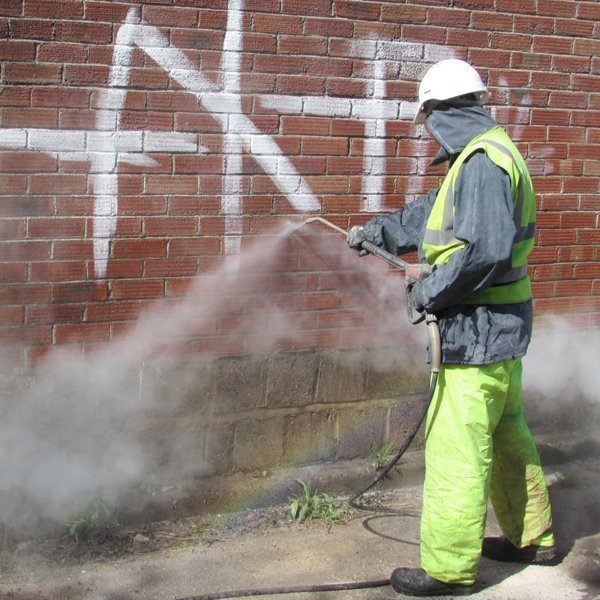
Pressure helps deliver steam to the surface with force, but higher pressure is not automatically better for every cleaning job. What matters is having enough pressure and steam volume for the type of dirt and surface involved.
Steam breaks down dirt through more than pressure alone. Heat does much of the work, while pressure helps move that heat into difficult areas and disturb loosened contamination.
For professional cleaning, this is why choosing a machine based purely on the biggest pressure number can be misleading. A cleaning machine needs to produce useful steam consistently, not just display an impressive figure on a specification sheet.
What happens when steam hits dried-on dirt?

Dried-on dirt often becomes difficult because moisture has evaporated and left behind a concentrated layer of residue. It may contain food particles, oils, dust, minerals or other material that has bonded firmly to the surface.
Steam introduces heat and moisture to that layer. The heat softens the contamination while the vapour helps penetrate and loosen it.
This is another reason steam breaks down dirt rather than simply pushing it around. Once the structure of the deposit has been weakened, the remaining physical removal becomes much easier.
For businesses dealing with ovens, production equipment, floors, machinery or heavily used facilities, that can save a considerable amount of elbow grease.
Can steam remove dirt without harsh chemicals?

Steam can clean many types of dirt and grease using heat and water rather than relying entirely on chemical cleaning products. The exact approach depends on the surface, contamination and cleaning task.
For businesses trying to reduce chemical use, this can be useful. There is also less risk of simply replacing one cleaning problem with another layer of product residue.
Steam breaks down dirt through physical and thermal action, meaning the cleaning process does not have to depend on a strong chemical reaction every time.
That does not mean chemicals are never appropriate. Some cleaning jobs call for specialist products. Steam simply gives cleaning teams another powerful tool, and one that uses water as its main cleaning medium.
Why does steam work well on sticky residues?

Sticky residues can be frustrating because they cling tightly to surfaces and often spread when you try to wipe them away. Labels, food residue, oils and other deposits can leave behind a tacky film that seems determined to remain there.
Heat can soften this material and reduce its grip. Once loosened, it can usually be removed with a suitable cloth, brush or other attachment.
The principle is simple: make the contamination easier to move before trying to move it. Steam breaks down dirt by changing the conditions around the contamination instead of asking someone to scrub harder and hope for the best.
How does steam help clean textured surfaces?
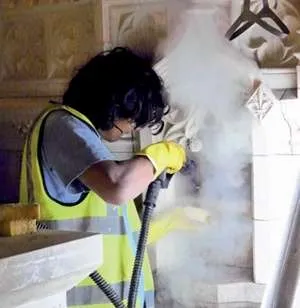
Textured surfaces create plenty of hiding places for dirt. Grooves, ridges and uneven finishes can trap contamination that a flat mop or cloth simply skims over.
Steam can reach into these uneven areas, helping to loosen material that would otherwise remain behind. A suitable brush attachment can then provide mechanical agitation while the steam continues to soften the contamination.
This can be useful across commercial environments, from tiled floors and kitchens to industrial equipment and heavily used work areas.
Can steam remove dirt from cracks and seams?
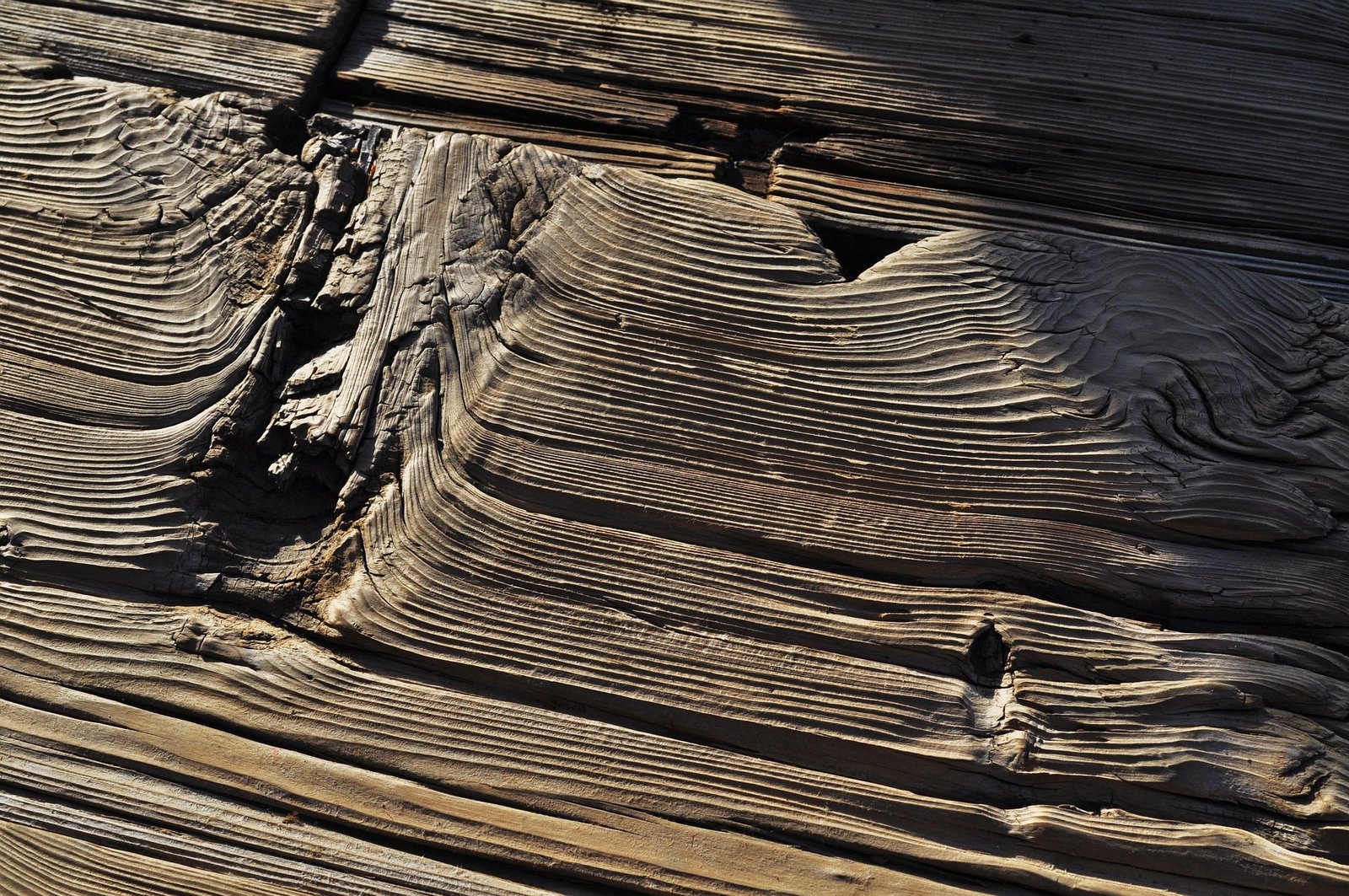
Yes, provided the surface and equipment are suitable for steam cleaning. Cracks and seams are particularly good at collecting dirt because they are difficult to wipe properly.
Steam can be directed into these narrow areas, where the heat and pressure help loosen trapped contamination. With the right attachment, the cleaning process becomes much more precise than simply flooding the area with water.
Steam breaks down dirt in these awkward spaces by bringing heat directly to places that conventional cleaning methods can struggle to reach.
Check out our range of steam cleaners!
Why is less water useful for commercial cleaning?

Using less water can be a major practical advantage in busy workplaces. Traditional cleaning methods can leave surfaces wet for extended periods, which can mean longer drying times, disruption and the need to manage wet floors carefully.
Dry steam systems use heated vapour with relatively low moisture content, so they can clean without soaking the surface in the same way as a conventional wash-down process.
That can be particularly useful when a business needs to clean an area and get it back into use quickly. Nobody wants to shut down half a workplace because the floor has become an indoor swimming pool.
Does steam work on bacteria as well as dirt?

High-temperature steam can help reduce microorganisms on suitable surfaces because heat can damage or destroy many types of bacteria and other microbes. The exact result depends on temperature, contact time, surface type and how the machine is used.
For businesses, this means steam can serve a purpose beyond making something look cleaner. It can form part of a wider hygiene process where controlling contamination matters.
Steam breaks down dirt while its heat can also provide a useful hygiene benefit, making it particularly relevant in environments where both cleanliness and sanitation are important.
What types of dirt can steam tackle?

Steam can be useful against a wide range of contamination, including grease, oils, dried food, sticky residues, general grime, dirt deposits and some biological contamination.
It can also be useful for cleaning awkward areas such as grout lines, machinery joints, equipment edges and textured surfaces.
The important point is that steam is not a universal solution for every material or stain. The cleaning method should always match the surface and the contamination. Delicate materials may require lower settings, shorter contact times or a different cleaning method altogether.
Why does steam reduce the need for heavy scrubbing?

Scrubbing works by physically forcing contamination away from a surface. Sometimes that is exactly what you need. The problem is that stubborn dirt can require a lot of pressure and repeated passes.
Steam does some of the preparation for you. By heating and loosening the contamination first, it can reduce the amount of mechanical effort needed afterwards.
That is where steam breaks down dirt in a practical sense. It does not mean the operator never needs to wipe, brush or vacuum. It means the dirt can be made easier to remove before those final steps take place.
Does the temperature of the steam matter?

Yes. Temperature is central to how steam cleaning works because the heat is what softens many forms of contamination and provides the thermal action that makes steam so useful.
Professional machines are designed to produce steam at temperatures suited to demanding cleaning work. For example, our Pure i6 industrial steam cleaner produces steam at up to 165°C, giving businesses the high-temperature vapour needed for serious cleaning applications.
The goal is not simply to make the steam as hot as possible. It is to deliver useful heat consistently and in a way that suits the cleaning task.
Why does steam work so well on commercial cleaning jobs?

Commercial cleaning often involves a mixture of problems rather than one simple type of dirt. A kitchen might have grease, food residue and baked-on deposits. A workshop could have oil, grime and dust. A healthcare environment may have strict hygiene requirements alongside everyday dirt.
Steam gives cleaning teams a flexible method that can tackle several of these problems using the same basic principle.
Our commercial and industrial steam cleaners are designed for demanding environments, with models available for different levels of use and cleaning requirements. Our industrial range also includes self-descaling boilers, which are designed to reduce the problems caused by limescale build-up during regular use.
How does steam cleaning compare with simply using more chemicals?
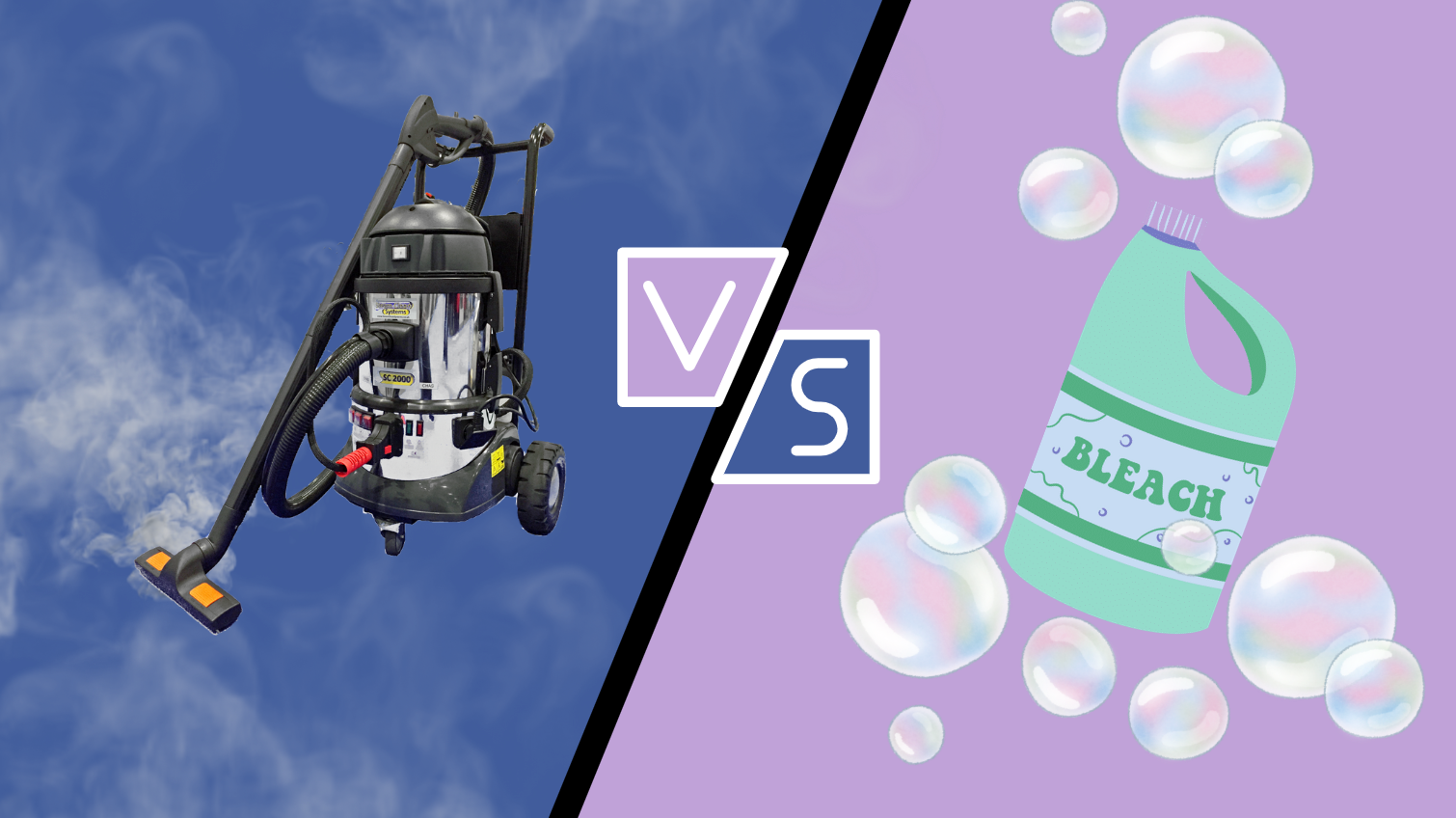
More chemical does not necessarily mean a cleaner surface. If contamination is physically bonded to a surface, increasing the amount of cleaning product may not solve the underlying problem.
Steam approaches the job differently. It uses heat and controlled moisture to loosen contamination before it is removed.
For businesses, that can mean reducing reliance on chemical products for suitable cleaning tasks while still achieving a thorough result. It can also help avoid leaving unnecessary chemical residue behind.
Steam breaks down dirt through heat and physical action, giving cleaning teams an alternative when simply adding more product is not producing the result they need.
What makes a professional steam cleaner different?

A professional steam cleaner needs to do more than produce hot vapour for a few minutes. Commercial users need consistent steam output, suitable pressure, practical attachments and a machine that can cope with repeated use.
This is where machine design becomes important. Our commercial and industrial models are built for professional cleaning environments, with features such as adjustable steam flow and, on selected machines, vacuum functionality.
The right combination allows operators to match the steam output and cleaning tool to the job rather than attacking every surface with the same setting.
How can businesses get better results from steam cleaning?

Start with the dirt rather than the machine. Identify what you are trying to remove, what surface it is stuck to and how much cleaning is required. Then choose the appropriate steam setting and attachment.
Give the steam enough contact time to soften the contamination, but avoid simply holding it against a surface indefinitely. Work methodically, loosen the dirt and remove it rather than allowing the loosened material to dry back onto the surface.
Steam breaks down dirt most effectively when the heat, steam flow, pressure, attachment and cleaning technique are working together.
Why does the right steam cleaner matter?
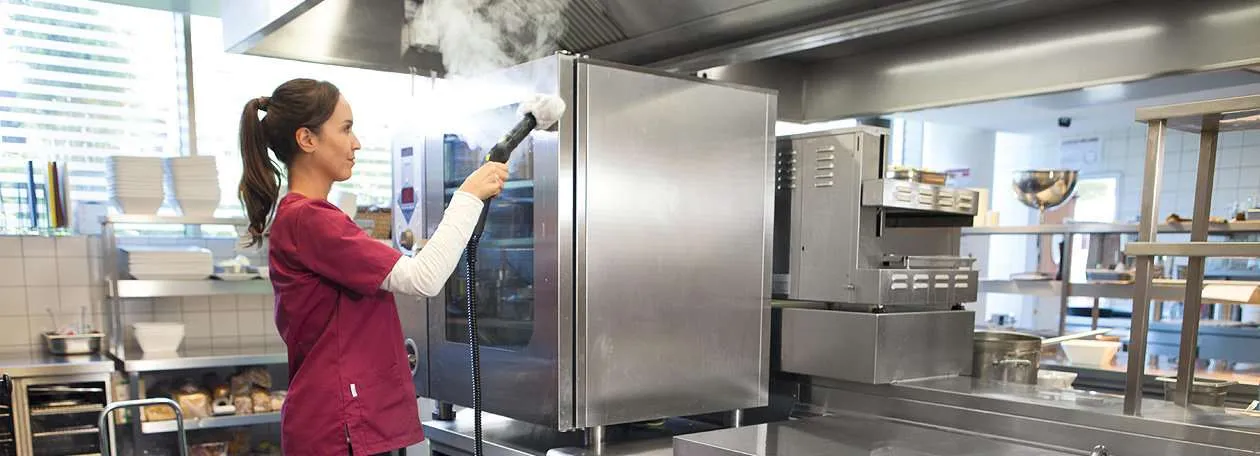
A steam cleaner is only useful if it can keep producing the steam your cleaning work actually requires. A machine that struggles with output, takes too long to heat or cannot cope with regular use can quickly become another problem on the cleaning checklist.
That is why we focus on commercial and industrial steam cleaners designed around real cleaning applications. Whether you are dealing with grease, dried-on grime, machinery, floors, kitchens or hygiene-sensitive environments, the machine needs to match the job.
The science behind steam cleaning is fairly straightforward. Water is heated, turned into vapour and delivered to the surface. The clever part is what happens next. Heat loosens the contamination, steam reaches awkward areas and the operator removes what has been released.
Steam breaks down dirt because it changes the conditions that allow grime to stay stuck in the first place. Once the dirt loses its grip, the cleaning job becomes considerably less of a battle.
And that is really the point. You are not trying to win a wrestling match with a dirty floor. You are trying to clean it.
