
Commercial & Industrial Steam Cleaners | Pure Steam Cleaners.uk


Quick Summary
Steam cleaning engine parts is generally safe when the cleaner runs at low pressure and you protect electrical components. Cool the engine fully, disconnect the battery, seal connectors and the airbox, keep the nozzle 20 to 30 cm from surfaces, and dry the bay thoroughly before reconnecting.
- Use low-pressure steam, never high-pressure jets, on an engine bay.
- Seal connectors, sensors, the airbox and the ECU before any steam touches the engine.
- Keep the nozzle roughly 20 to 30 cm from surfaces and never closer than 10 cm to wiring.
- Let the bay dry for several hours before reconnecting the battery.
Table of Contents
- Is Steam Cleaning Engine Parts Safe?
- Engine Cleaning Safety Precautions Before You Start
- Preparing the Engine and Protecting Electrical Components
- Choosing a Steam Cleaner for Engine Cleaning
- Step-by-Step: How to Steam Clean an Engine Bay Safely
- Drying an Engine After Steam Cleaning
- Checks to Make Before Restarting Your Engine
- Frequently Asked Questions
Steam cleaning an engine bay can be done safely, but only with the right technique, low pressure, and careful protection of electrical parts. This guide walks through the process step by step, from the initial safety checks through to restarting the engine. Careful preparation matters more than the steam itself, and most damage comes from skipping the basics.
Many engine bays hold connectors, sensors and wiring that do not tolerate water well. Moisture trapped in these areas can cause corrosion, short circuits or faults that appear days later. That is why the method below focuses on protection first and cleaning second.
Here is what you need to know before you start:
- Use low-pressure steam, not high-pressure jets
- Cover or seal electrical connectors and the airbox
- Keep the nozzle at a safe distance from components
- Dry the bay thoroughly before reconnecting power
Is Steam Cleaning Engine Parts Safe?
Steam cleaning engine parts is generally safe when the cleaner runs at low pressure and the operator protects sensitive components.
The risk comes from water and pressure, not from heat alone.
Engine Cleaning Safety Precautions Before You Start
Before any steam touches the engine, run through a short safety check:
- Let the engine cool fully so hot metal does not flash water into steam
- Disconnect the battery to avoid accidental shorts
- Confirm the bay is well ventilated and the floor is safe to wet
- Wear eye protection and gloves rated for heat
A common mistake is rushing this stage. Taking ten minutes to check the setup prevents most of the expensive problems.
Preparing the Engine and Protecting Electrical Components
Preparation decides how much water reaches the wrong places. Work from the top of the bay downwards, and remove loose dirt with a dry brush first. This reduces the grime the steam has to shift and keeps the wet work shorter.
Then protect every area that should stay dry. Wrap exposed connectors in plastic and seal them with tape. Cover the alternator, fuse box and control modules where practical. The table below sets out how each vulnerable component should be handled, because a single generic warning about electrics is not enough when the parts fail in different ways.
| Component | Risk if exposed | Protection method |
|---|---|---|
| Alternator | Water in the bearings and windings causes whining, charging faults or seizure | Bag the whole unit and tape the seams; do not direct steam at the vents |
| Sensors (intake, throttle, camshaft, crankshaft) | Moisture in the connector pins causes misfires, rough running or false readings | Wrap the connector body and the first 10 cm of loom; leave the sensor tip exposed only if it must be cleaned |
| Ignition components (coil packs, distributor, plug wells) | Water tracking causes misfires and hard starting | Cover coil packs and plug wells individually; never steam into a plug well |
| Air intake and airbox | Water ingested into the intake can hydraulic-lock or damage the engine | Seal the airbox opening with tape and plastic; check the seal before starting |
| Exposed connectors and older wiring | Cracked insulation and corroded pins cause intermittent faults that appear days later | Inspect the loom first; bag any connector with cracked or brittle insulation and do not steam near it |
| ECU and control modules | Water ingress causes costly electronic failure | Cover the module and its connectors; keep the nozzle at least 30 cm away |
Covering connectors, sensors and the airbox
Focus on the parts most likely to fail if they get wet:
- Electrical connectors and plug housings
- Sensors, including those on the intake and throttle
- The airbox and any open intake paths
- The ECU and wiring looms
Seal the airbox opening carefully. Water that enters the intake can cause serious engine damage, so this step is not optional. On older vehicles, inspect the wiring before you bag it: brittle insulation and previously repaired connectors are the parts most likely to let moisture in, and they are the ones a quick visual check will miss.
Pure i8 Heavy Duty Industrial Steam & Vacuum Cleaner →
A bag that is open at the bottom collects water rather than keeping it out. Tape every seam and check each cover by hand before the steam starts.
Choosing a Steam Cleaner for Engine Cleaning
Choose a machine that lets you control pressure and temperature. A low-pressure steam cleaner with a narrow, adjustable nozzle gives you the control you need around delicate parts.
The Pure i6-SO Industrial Professional Steam Cleaner, priced at £1,995.00, has a steam jet and detergent supply for tougher grease. The Pure v6-DT Commercial Steam Cleaner With Vacuum and Detergent, at £1,745.00, is a compact option with 6 bar steam pressure. These high-pressure capabilities are equally effective when you need to clean your dirt bike to maintain optimal mechanical performance after a muddy session.
Whichever machine you choose, follow its operating and maintenance instructions, and keep the boiler in good condition, especially in hard-water areas.
Step-by-Step: How to Steam Clean an Engine Bay Safely
Follow these steps in order. The procedure below covers an engine left in the vehicle; loose engine parts removed from the vehicle are covered separately further down.
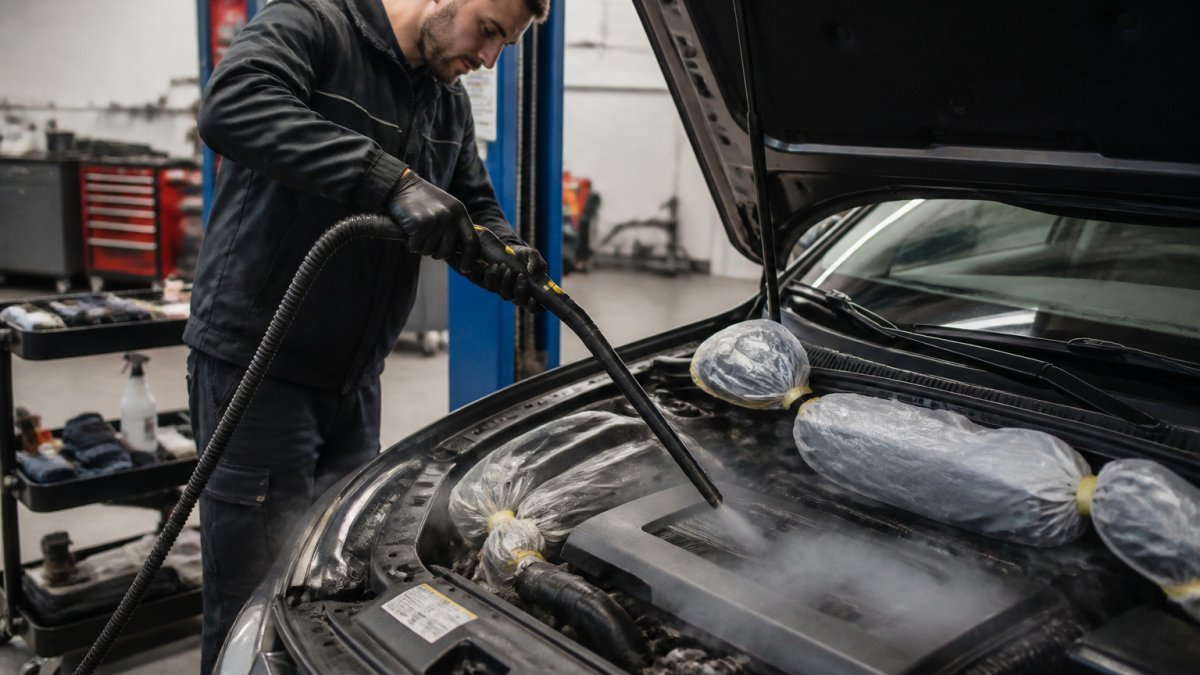
- Cool and disconnect. Let the engine cool fully and disconnect the battery. Steam on hot metal flashes to vapour and drives moisture into places it would not otherwise reach. Check you have the right connector tool for the steam hose and fittings before setting up the cleaner.
- Dry brush the loose dirt. Remove dust and debris before any water touches the bay. This shortens the wet work and reduces the grime the steam has to shift.
- Protect the sensitive parts. Seal connectors, sensors, the airbox and the ECU as set out in the protection table above.
- Set the steam cleaner. Use low pressure and keep the nozzle roughly 20 to 30 cm from surfaces. Move closer only for stubborn grease on cast metal, and never closer than 10 cm to wiring or connectors.
- Work top to bottom. Steam one section at a time so grime drops downwards and away from the work area. Keep the nozzle moving; holding it still on one spot raises the surface temperature and pushes moisture into seams.
- Use detergent sparingly. Apply only to heavy grease, then rinse lightly. Detergent residue left in crevices attracts dirt and can mask a leak.
- Remove the protection and inspect. Check that the covers are intact and that nothing has shifted. Look for pooled water around connectors and wipe it away with a clean cloth.
- Dry thoroughly. Leave the bay open and use a clean, low-pressure air line to push water out of crevices and connectors. Allow several hours before reconnecting anything.
- Reconnect and check. Reconnect the battery, start the engine and watch for warning lights or rough running before driving.
Cleaning loose engine parts versus an installed engine
Parts removed from the vehicle, rocker covers, intake manifolds, brackets, sumps and timing covers, can be cleaned more aggressively because there is no wiring or electronics to protect. Lay them on a draining surface, keep the nozzle at 20 to 30 cm, and use detergent on heavy carbon and oil. Avoid steam on machined mating faces for longer than necessary, and dry the part fully before refitting so no moisture is trapped under a gasket. Parts still installed follow the full protection procedure above.
Work in sections of roughly 30 cm square. Smaller sections keep the nozzle moving, stop heat building in one place and make it obvious when a cover has shifted.
Watch out: Never aim steam directly at electrical connectors or the airbox, even when they look covered. A small gap in the wrapping lets water in.
Drying an Engine After Steam Cleaning
Drying is as important as cleaning. Leave the bay open and let air move through it, using a clean, low-pressure air line to push water out of crevices and connectors.
Allow the engine to dry for several hours before you reconnect anything. Check for pooled water around the connectors and wiring, and wipe it away with a clean cloth.
Checks to Make Before Restarting Your Engine
Before you reconnect the battery and start the engine, run through these checks:
- Confirm all electrical connectors are dry and fully seated
- Remove every protective cover and bag
- Look for any signs of moisture, corrosion or residue
- Check the airbox and intake are clear and dry
- Reconnect the battery and watch for warning lights on the dashboard
If a warning light appears or the engine runs roughly, stop and inspect the affected area again before driving the vehicle. To keep the cleaner’s boiler and components in good order and avoid faults, see how to maintain industrial steam cleaners.
Frequently Asked Questions
Is steam cleaning safe for engine parts?
Steam cleaning can be safe for engine parts when it is done carefully. The main risk is moisture reaching electrical connectors, sensors and wiring, which can cause corrosion or faults later. Use low-pressure steam, keep the nozzle moving, protect sensitive components beforehand and dry the area thoroughly afterwards. Judge each engine on its own condition and layout.
Can steam damage electrical connectors or sensors?
Yes, if water is forced into connectors, sensors or wiring, it can cause corrosion, short circuits or intermittent faults. Cover or wrap these parts with plastic before cleaning, avoid aiming the wand directly at them, and inspect for moisture afterwards. If a connector has been wet, allow it to dry fully before reconnecting or starting the engine.
How do you dry an engine after steam cleaning?
Remove any protective covers and wipe visible surfaces with a clean microfibre cloth. Use a low-pressure air line or leave the bonnet open in a warm, ventilated space so trapped water can evaporate. Pay particular attention to connectors, under the airbox and around the alternator. Allow ample time before reconnecting the battery or starting the engine.

