
Commercial & Industrial Steam Cleaners | Pure Steam Cleaners.uk


Table of Contents
- Why Sanitising Care Home Floors Matters
- Understanding the Care Home Floor Cleaning Procedure
- Equipment and Supplies You’ll Need
- Steam Cleaning Care Home Floors: The Method
- Developing Your Care Home Cleaning Schedule
- Care Home Spill Cleaning Procedure
- Safety Considerations for Staff and Residents
- Frequently Asked Questions
Last Updated: 16 October 2026
Why Sanitising Care Home Floors Matters
The ability to sanitise care home floors effectively is non-negotiable for maintaining spotless, hygienic environments. Residents and staff depend on clean environments to prevent infections and support wellbeing. Floors accumulate bacteria, viruses, and contaminants daily, especially in bathrooms, dining areas, and communal spaces where vulnerable people gather.
Traditional chemical cleaners leave residue that can irritate sensitive skin and respiratory systems. This is where sanitising care home floors with steam becomes essential. Steam eliminates pathogens without toxic fumes, making it safer for elderly residents with compromised immune systems.
At Pure Steam Cleaners, we understand the regulatory pressures care homes face. Your inspectors expect rigorous hygiene standards. Steam cleaning delivers visible, documented results that meet those requirements without chemical hazards.
Understanding the Care Home Floor Cleaning Procedure
A proper care home floor cleaning procedure follows a logical sequence. You cannot simply mop and move on. Each step matters for thorough sanitation.
Pre-cleaning inspection and preparation
Walk the floor before you clean. Look for visible dirt, spills, sticky patches, or debris. Note any damaged flooring that needs repair.
Clear the area of obstacles:
- Move portable furniture and equipment
- Remove rubbish bins temporarily
- Sweep up loose debris with a broom
Check that all residents have left the space. Post “wet floor” signs at entry points. Open windows for ventilation if possible.
Inspect your equipment before starting. Fill water tanks and check hose connections. Test steam pressure on a small, inconspicuous area first.
Removal of loose debris
Loose dirt prevents steam from reaching the floor surface effectively. Sweep thoroughly with a soft-bristled broom.
Pay attention to corners and edges where dust accumulates. Use a hand brush in tight spaces around furniture legs. Remove any visible hair, lint, or debris.
For stubborn dirt, use a dry vacuum with a HEPA filter. This prevents dust from becoming airborne where residents might inhale it.
Once the floor is clear, you’re ready to sanitise.
Equipment and Supplies You’ll Need
Successfully learning how to sanitise care home floors requires the right tools. Investing in proper equipment prevents damage to flooring and ensures thorough sanitation.
Essential equipment for care home floor cleaning:
- Commercial steam cleaner with continuous steam output
- Hard floor attachment or brush head
- Microfibre cloths for drying
- Mop bucket for water refills
- Squeegee for removing excess moisture
- “Wet floor” warning signs
- Personal protective equipment (gloves, closed-toe shoes)
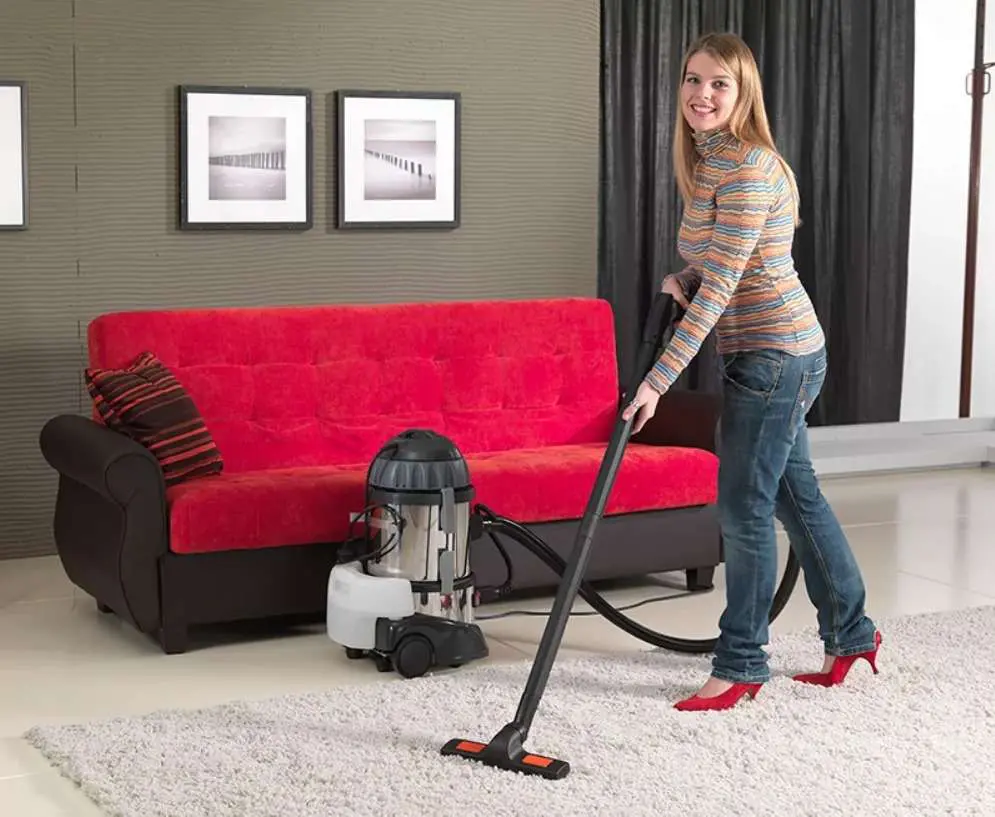
The Pure v6 Commercial Steam Vacuum Cleaner is specifically designed for care home environments. It delivers 6 bar steam pressure with 43 g/min continuous output, enough power to eliminate bacteria without damaging delicate flooring.
Optional but helpful supplies:
- Extension hoses for reaching distant areas
- Different brush attachments for varied floor types
Steam Cleaning Care Home Floors: The Method
Steam cleaning is straightforward when you follow a systematic approach. The steam cleaning care home floors process typically takes 2-4 hours depending on floor area.
Setting up your steam cleaner
Fill the water tank with water.
Allow 10-15 minutes for the machine to heat up. Check the manufacturer’s guidance for your specific model.
Connect the hard floor attachment. This spreads steam evenly across the surface. Attach the microfibre cloth or brush head according to floor type.
Test steam output on a hidden area first. This confirms the machine is working and prevents surprises on visible sections.

Application technique for even coverage
Work in overlapping passes. Move the cleaner slowly across the floor, rushing leaves wet patches and uneven results.
Start at one corner and work toward the exit. This prevents you from walking over freshly cleaned areas.
Overlap each pass by 15-20 centimetres. This ensures complete coverage and removes all bacteria and contaminants.
For stubborn stains or discoloured areas:
- Apply steam for 3-5 seconds longer
- Let the heat soften the residue
- Pass over the area a second time if needed
- Avoid excessive dwell time on delicate flooring
Maintain steady, consistent pressure. Do not press down hard, the steam does the work.
Drying and final checks
Once you’ve covered the entire floor, allow 15-30 minutes for drying. Open doors and windows to accelerate evaporation.
Walk the floor to inspect your work. Look for:
Pure v6-T Commercial Steam and Vacuum Cleaner →
- Streaks or missed patches
- Remaining stains or discolouration
- Wet spots that need additional drying
If you spot missed areas, make a second pass. It’s better to catch these now than have residents slip on damp flooring later.
Remove warning signs only when the floor is completely dry. Wet floors create liability and safety hazards.
Developing Your Care Home Cleaning Schedule
Consistency prevents bacterial buildup. A structured care home cleaning schedule keeps hygiene standards high and inspectors satisfied.
Consider your resident population when scheduling:
- More frequent cleaning for wards with infection control concerns
- Additional sanitisation after known illness outbreaks
- Extra attention to communal dining and bathroom areas
Document every cleaning session. Record the date, time, areas cleaned, and staff member responsible. This creates an audit trail for inspectors and identifies patterns.
Staff training matters. Ensure all team members understand the procedure. Inconsistent technique leads to missed patches and uneven results.
Care Home Spill Cleaning Procedure
Spills demand immediate attention. Bacteria multiply rapidly on moist surfaces. A quick response prevents cross-contamination.
Immediate response and containment
Act promptly upon discovering a spill.
Assess the spill type:
- Bodily fluids (blood, urine, faeces)
- Food or drink
- Chemical or medication
- General moisture
For bodily fluids, follow infection control protocols (Decontamination). Wear gloves and use absorbent paper to remove solid material first.
Contain the spill to prevent spreading. Use paper towels or absorbent pads to soak up liquid. Do not let it flow across the floor into other areas.
Sanitisation and residue removal
Once you’ve removed bulk material, apply steam to the affected area. Let the steam penetrate for 10-15 seconds to kill pathogens.
Wipe the area with a clean microfibre cloth. This removes residue and moisture. Repeat the steam application if the spill was extensive.
Allow the area to dry completely before allowing foot traffic. Place a warning sign over the spot for 5-10 minutes.
For chemical spills, check the safety data sheet first. Some substances react unpredictably with steam or heat. Follow manufacturer guidance before applying any cleaning method.
Document spill incidents in your cleaning log. This helps identify problem areas and track hygiene patterns.
Keep a spill kit near high-risk areas: gloves, paper towels, absorbent pads, and a portable steam cleaner. Quick access means faster response and better contamination control.
Safety Considerations for Staff and Residents
Steam cleaning poses risks if not managed carefully. Protecting your team and residents is essential.
Staff safety during cleaning:
- Wear closed-toe shoes with slip-resistant soles
- Use heat-resistant gloves when handling equipment
- Keep hair tied back away from steam vents
- Never point steam directly at skin or eyes
- Ensure adequate ventilation to prevent heat buildup
- Take breaks in cool areas to prevent heat exhaustion
Resident safety during and after cleaning:
- Restrict access to the area being cleaned
- Use clear warning signs before, during, and after sanitisation
- Allow adequate drying time before residents re-enter
- Ensure pathways remain clear of equipment or hoses
- Check that residents with mobility issues have safe routes around cleaning areas
Equipment maintenance prevents accidents:
- Inspect hoses for cracks or leaks before each use
- Check that connections are tight and secure
- Never leave a running machine unattended
- Store equipment safely away from resident areas
- Follow the manufacturer’s maintenance schedule
The Pure v6 models feature copper boilers with external heating elements and a patented self-descaling method that takes just 5 minutes monthly, even in hard water areas. This reliability means fewer unexpected breakdowns during critical cleaning windows.
Never mix steam cleaning with chemical disinfectants. The combination creates toxic fumes and negates the safety benefit of chemical-free cleaning. Choose one method and stick with it.
Maintaining hygiene in care homes demands a systematic approach. Steam sanitisation eliminates pathogens without toxic residues, protecting vulnerable residents and staff alike. When you invest in reliable equipment and follow a consistent procedure, your floors stay genuinely clean, not just surface-clean.
The Pure v6 Commercial Steam Vacuum Cleaner delivers the power and reliability care homes need. With continuous steam output and patented limescale protection, it handles daily sanitisation without the maintenance headaches that plague other machines. Buy online and get free next working day delivery for orders before 1pm.
Frequently Asked Questions
How often should care home floors be sanitised?
Daily sanitisation is standard in most care homes, particularly in high-traffic areas, bathrooms, and communal spaces. Bedrooms and quieter zones may be sanitised 2-3 times weekly depending on usage and occupancy. Spills and visible soiling require immediate sanitisation. Your care home’s regulatory inspection body will specify frequency based on risk assessment and resident needs.
What is the difference between cleaning, sanitising and disinfecting care home floors?
Cleaning removes visible dirt and debris. Sanitising reduces microorganisms to safe levels using heat or approved methods. Disinfecting kills specific pathogens using chemical or thermal methods. Steam cleaning achieves both sanitisation and disinfection without chemicals, making it ideal for care homes where residents have compromised immunity or chemical sensitivity.
Can steam alone sanitise care home floors effectively?
Yes. Commercial steam cleaners like the Pure v6 range deliver 6 bar pressure with continuous output, ensuring thorough penetration into grout, seams, and textured surfaces. Steam is chemical-free, making it safer for residents and staff, and meets hygiene standards without harsh residues.
How do you handle a bodily-fluid spill in a care home using steam?
First, contain the spill with absorbent material and dispose of it safely. Put on appropriate PPE. Pre-clean the area with paper towels to remove bulk contamination. Apply steam at full pressure to the affected zone, allowing the heat to penetrate for 10-15 seconds. Repeat over the entire spill area. Allow the floor to dry completely before the area is reopened to residents.
