
Commercial & Industrial Steam Cleaners | Pure Steam Cleaners.uk

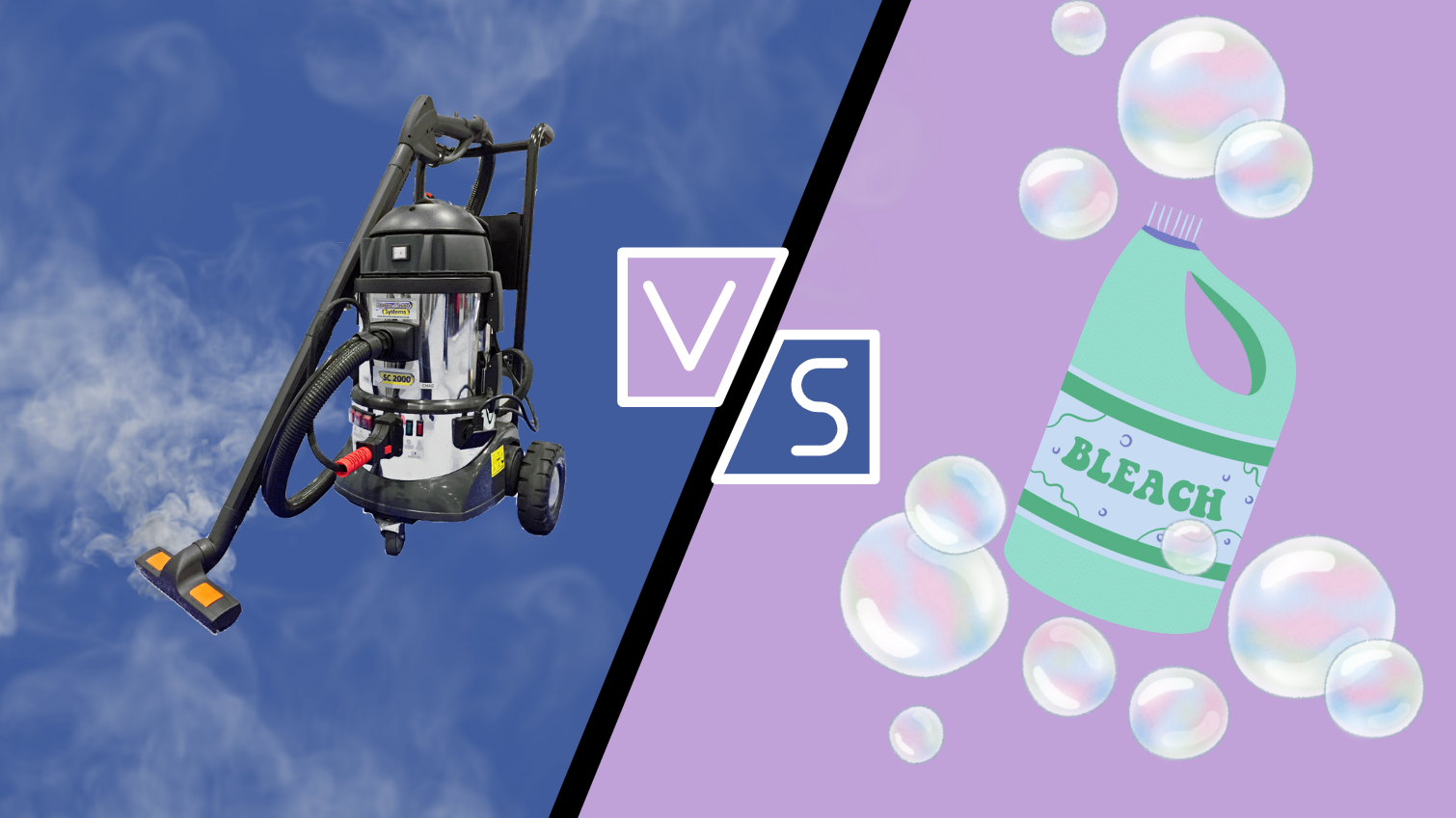
Steam cleaning and bleach serve different cleaning needs. Steam can help loosen dirt on suitable surfaces, while a bleach disinfectant must be used according to its label. For commercial cleaning, choose by surface compatibility, the task and any disinfection requirements, rather than assuming one method is always better.
Cleaning and Disinfection: The Key Difference

Start by separating cleaning from disinfection. Removing visible dirt is not the same as achieving a specified reduction in microorganisms. Where disinfection is required, use a method supported by evidence for the intended application and follow your site’s hygiene procedures.
What Is Steam Cleaning?

Steam cleaners heat water and deliver steam through a hose and attachment to help loosen dirt. Brushes, cloths or a vacuum can then collect the loosened material, depending on the machine and task.
Compare steam-only and steam-vacuum equipment by how you will collect residue, the surfaces involved and your daily workload. A boiler temperature or pressure figure alone does not demonstrate disinfection performance at the surface.
What Does Bleach Actually Do?
Many bleach products contain sodium hypochlorite. A product sold for disinfection should be selected and used for the applications stated on its label, including the specified concentration and contact time.
Check the product instructions and safety data sheet before use. Do not mix bleach with other cleaning chemicals. The HSE guidance on disinfectants explains why effectiveness, chemical compatibility and surface suitability all matter.
How Steam Helps Remove Dirt

Heat and the action of the chosen attachment can help release dirt from suitable surfaces. Work methodically and collect the loosened residue. For disinfection, ask for evidence covering the particular machine, attachment, surface and operating method rather than relying on a general temperature claim.
When Bleach Is Already Specified

Bleach may already form part of an established cleaning and disinfection programme. Before changing that programme, check why the product is specified and what evidence or approval is needed for an alternative.
Comparing Disinfection Requirements

Neither a quick pass with steam nor an unspecified bleach dilution guarantees disinfection. Follow a documented procedure appropriate to the task. Healthcare and other controlled environments should use their approved hygiene procedures and seek advice from the responsible specialist before changing methods.
Reducing Chemical Use

Steam used without added detergent can reduce the need for cleaning chemicals on suitable jobs. This does not remove the need for operator training, suitable protective equipment or a task-specific safety assessment. Some jobs will still need a separate cleaning or disinfection product.
Bleach Handling and Material Compatibility

Check bleach compatibility with metals, fabrics, coatings and other materials before use. Follow the label’s handling and ventilation instructions, and use the protection specified for the task. Never assume a stronger mixture will produce a better result.
The Environmental Angle

Assess environmental performance using the actual cleaning process: energy, water, chemical use, consumables and waste. Steam may reduce chemical use for a particular task, but this alone does not establish that every steam-cleaning process has a lower overall environmental impact.
Costs Over Time

Compare the full cost of the job, including labour, equipment purchase, servicing, replacement accessories, water, energy and any chemicals. Steam equipment has running and maintenance costs, so calculate savings against your own workload rather than assuming a fixed payback period.
Safety and Compliance

Both methods need safe working procedures. Steam equipment introduces heat, pressure, moisture and electrical considerations; chemical products introduce their own handling risks. Follow the equipment manual and product instructions. The HSE guidance on electrical risks from steam and water pressure cleaners is a useful starting point for equipment safety.
Odour and Air Quality

Smell is not a reliable measure of cleanliness or disinfection. Consider ventilation, the products used and the contamination being removed. Avoid claims that either method automatically improves indoor air quality.
Surface Compatibility

Check the surface manufacturer’s care instructions before choosing either method. Heat, moisture or chemicals may damage some finishes and materials. Where permitted, test a concealed area first and use the appropriate attachment and settings.
Training and Ease of Use

Train operators in the specific equipment and procedure. For steam cleaning, this includes selecting attachments, collecting residue and safe shutdown. For bleach products, it includes the label instructions, contact time, storage and safe handling.
Long-Term Hygiene

Neither method keeps a surface clean indefinitely. Set a cleaning schedule based on use, contamination and the site’s hygiene requirements. Handle cloths and attachments appropriately and inspect the result rather than assuming that a treated surface cannot become contaminated again.
Public Perception

Explain your cleaning approach with clear, supportable statements. Customers are better served by knowing what is cleaned, how the method is selected and how staff are trained than by broad promises such as “germ-free” or “always greener”.
The Verdict

Choose steam for suitable tasks where loosening and removing dirt is the objective and the surface permits heat and moisture. Where a bleach disinfectant is specified, follow its label and your site’s procedure. Do not replace a required disinfection step with steam without evidence that the proposed method meets the requirement.
For help selecting equipment, compare our commercial steam cleaners and industrial steam cleaners. Tell us about the surfaces, daily workload and whether you need vacuum recovery so we can help narrow down the options.
Compare Our Commercial Steam Cleaners
Pure Steam Cleaners is a trading brand of Cleaning Equipment Services Ltd. We supply commercial and industrial steam cleaning equipment and provide UK product advice. Contact our team for help choosing a machine.
