
Commercial & Industrial Steam Cleaners | Pure Steam Cleaners.uk

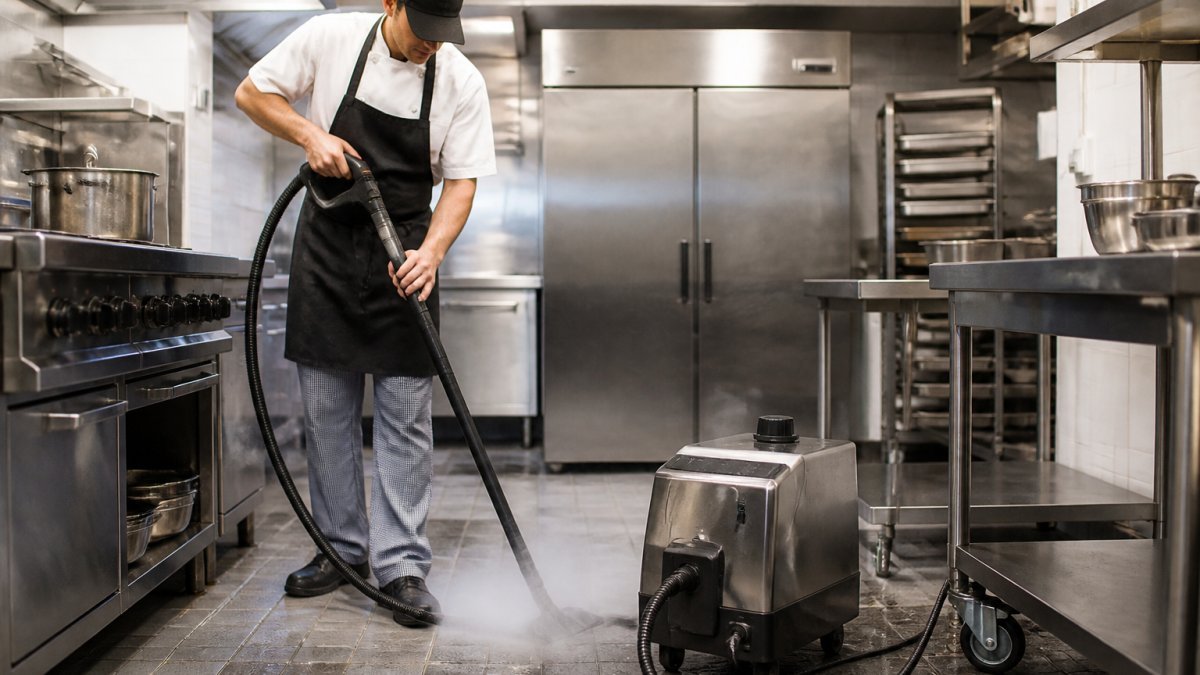
Table of Contents
- Why Steam Cleaning Works in Commercial Kitchens
- What You’ll Need Before You Start
- Safety Precautions for Steam Cleaning
- Step-by-Step: How to Steam Clean Commercial Kitchens
- Removing Heavy Grease from Kitchen Equipment
- Steam Cleaning Food Safety Regulations Explained
- Your Commercial Kitchen Deep Cleaning Checklist
- Best Steam Cleaning Equipment for Catering
- Frequently Asked Questions
Last Updated: 2 October 2026
Why Steam Cleaning Works in Commercial Kitchens
Steam cleaning commercial kitchens works because dry steam at high pressure melts baked-on grease on contact, then lifts it away without chemicals. The heat also kills bacteria on the surface it touches. For busy kitchens, that means less scrubbing, no chemical residue near food, and a faster turnaround between services.
This guide from Pure Steam Cleaners covers the full process, from fryers to floors.
A common mistake is treating steam as a light wipe-down tool. It is not. Used properly, it replaces the scraper, the degreaser and the scrubbing pad in one pass.
Steam does two jobs at once: it dissolves grease and sanitises the surface. That combination is why it suits food preparation areas so well.
What You’ll Need Before You Start
You need a commercial steam cleaner, the right attachments, and a few basic safety items before you begin. Domestic units do not hold enough pressure or water for a working kitchen.
Gather these first:
- A commercial steam cleaner with a jet nozzle and brush head
- Microfibre cloths for wiping loosened grease
- A scraper for thick, cold fat
- Heat-resistant gloves and eye protection
- A wet floor sign and a mop for run-off
- Food-safe covers for anything you cannot move
Check the machine holds pressure before you start. A weak unit will smear grease instead of lifting it.
Safety Precautions for Steam Cleaning
Steam burns are the main risk, and they happen fast. Treat every jet as hot enough to scald and keep it away from skin.
Follow these rules:
- Never point the jet at anyone, even briefly
- Keep water and cables away from live sockets
- Let surfaces cool before touching them
- Work in a ventilated space
- Never mix steam with chemical degreasers on the same surface
Switch off and isolate equipment before you clean inside it. Fryers and ovens should be off, drained and cool enough to work on safely.
Steaming a fryer that still holds hot oil can cause a violent splash. Drain and cool the unit first, every time.
Step-by-Step: How to Steam Clean Commercial Kitchens
The process runs from the dirtiest equipment to the cleanest surfaces. Work in that order and you avoid spreading grease back onto areas you have already cleaned.
Step 1: Fryers and Cooking Oil Areas
Drain the oil and let the unit cool. Scrape out solid fat first, then steam the walls and base. Hold the jet close and let the steam do the work rather than forcing the scraper.
Wipe the loosened grease away with a cloth as you go. Finish with a clean pass to remove any film.
Step 2: Ovens, Grills and Hoods
Start at the top and work down. Steam the oven interior, then the grill plates, then the hood and filters. Grease runs downward, so cleaning top-first stops it landing on clean surfaces.
For hoods, remove the filters and steam them separately. Baked-on carbon softens within seconds of contact.
Step 3: Floors, Drains and Prep Surfaces
Steam the prep surfaces last, after everything above them is clean. Work the floor from the back of the kitchen toward the door. Steam drains to clear fat build-up that causes smells.
Dry each surface before it is used again. A wet prep bench is a slip risk and a hygiene problem.
Removing Heavy Grease from Kitchen Equipment
Removing heavy grease from kitchen equipment comes down to heat and patience, not force. Steam softens the fat so it wipes away instead of smearing.
Pure v6-DT Commercial Steam Cleaner →
Three things make the job easier:
- Let the steam sit on the surface for a few seconds before wiping
- Keep the nozzle close to the grease, not far back
- Work in small sections so the fat does not cool before you remove it
Thick, cold fat on range sides and splashbacks is the hardest job in most kitchens. A scraper followed by steam handles it without harsh chemicals.
Steam the underside of shelves and the tops of extractor canopies. These are the spots that get missed and then drip onto food prep areas.
Steam Cleaning Food Safety Regulations Explained
Steam cleaning food safety regulations in the UK centre on one principle: surfaces must be clean enough to prevent contamination. The Food Standards Agency sets the rules that food businesses must follow. Maintaining these high standards requires meticulous attention to detail even in smaller appliances, where cleaning microwave stains effectively prevents the accumulation of bacteria that could otherwise compromise your entire hygiene protocol.
Food Standards Agency hygiene guidance for food businesses explains that food contact surfaces must be cleaned and disinfected regularly. Steam meets that standard because the heat sanitises as it cleans.
You still need a written cleaning schedule. Inspectors want to see what you clean, how often, and with what. Steam fits into that schedule as a chemical-free method for grease-heavy areas.
Food Standards Agency guidance on cleaning and disinfection confirms that heat treatment is an accepted way to disinfect surfaces. Keep records either way.
Your Commercial Kitchen Deep Cleaning Checklist
A commercial kitchen deep cleaning checklist keeps the job consistent, whoever is on shift. Use this one as a starting point and adjust it to your menu and equipment.
- Fryers drained, cooled and steamed
- Oven interiors and racks cleaned
- Grill plates and surrounds degreased
- Hood filters removed and steamed
- Floors steamed back to front
- Drains cleared and flushed
- Prep surfaces steamed and dried
- Fridges and freezers wiped down
- Waste area cleaned and checked
- Cleaning log signed and dated
Set a deep clean schedule around your quietest service. Most kitchens find a weekly rotation works better than one huge monthly job.
| Area | How Often | Steam Method |
|---|---|---|
| Fryers | Weekly | Drain, cool, steam walls and base |
| Ovens and grills | Weekly | Top-down steam, wipe as you go |
| Hoods and filters | Fortnightly | Remove filters, steam separately |
| Floors and drains | Daily | Back to front, dry after |
| Prep surfaces | Daily | Steam last, dry before use |
Best Steam Cleaning Equipment for Catering
The best steam cleaning equipment for catering holds pressure, runs for long shifts and copes with hard water. Those three things separate a machine that lasts from one that fails mid-service.
Our v6 range is built for this work. Each unit runs at 6 bar with a steam volume of 43 g/min, enough for the grubbiest surfaces. The copper boilers with external heating elements are not affected by limescale, even in hard water areas, and the patented self-descaling method takes five minutes a month.
For kitchens that also need to lift liquid waste, the Pure v6-DT Commercial Steam Cleaner With Vacuum and Detergent adds switchable detergent injection and a 3-litre water plus 3-litre detergent setup. The Pure v6-T Commercial Steam and Vacuum Cleaner covers the same ground without detergent.
Every unit comes with a 3-year boiler guarantee and free next working day delivery on orders placed before 1pm. That matters when a machine fails during a busy period.
Frequently Asked Questions
Is steam cleaning effective for commercial kitchen grease?
Yes. Steam at 6 bar pressure and 43 g/min volume softens and lifts baked-on grease from ovens, grills, hoods and fryer surrounds without chemical degreasers. The heat breaks the bond between grease and metal, so a jet nozzle or brush attachment removes residue that cold water and cloths leave behind. For heavy deposits, hold the nozzle on the surface for a few seconds before wiping, and use a detergent-injection model if the build-up is thick.
Does steam cleaning meet food safety standards for commercial kitchens?
Steam cleaning supports compliance with UK food hygiene rules, including the Food Safety Act 1990 and Regulation (EC) No 852/2004 as retained, which require food contact surfaces to be cleaned and disinfected. Steam reaches temperatures that kill many bacteria and leaves no chemical residue, so surfaces are ready for food contact once dry. You should still follow your own HACCP plan and cleaning schedule, and record steam cleaning as part of your due diligence.
How often should commercial kitchen equipment be deep cleaned?
Most commercial kitchens need a daily clean of food contact surfaces plus a deeper clean of ovens, fryers, hoods and floors at least weekly, with extract canopies and ductwork cleaned on a schedule set by your risk assessment and insurer. High-use sites such as hospitals and care homes often deep clean more often. Build a written commercial kitchen deep cleaning checklist with daily, weekly and monthly tasks, and sign it off so inspectors can see the schedule was followed.
Can steam cleaners be used on stainless steel kitchen surfaces?
Steam is safe on stainless steel when you use the right attachment and keep the nozzle moving. Stainless steel worktops, splashbacks, oven interiors and fridge linings all clean well with steam. Avoid holding the jet on one spot for long periods, and dry the surface afterwards to prevent water marks. Do not use steam on surfaces your manufacturer states are unsuitable, and always check the equipment manual before treating a new material.
Keeping a commercial kitchen clean enough for inspection, service after service, is a constant job. Pure Steam Cleaners builds machines that take the worst of it: 6 bar pressure for baked-on grease, copper boilers that shrug off limescale, and chemical-free cleaning that suits food areas. With a 3-year boiler guarantee and next working day delivery, getting started is straightforward. Buy online from Pure Steam Cleaners and put a machine to work in your kitchen this week.
