
Commercial & Industrial Steam Cleaners | Pure Steam Cleaners.uk


Last Updated: 23 October 2026
Quick Summary
Choosing a steam cleaner for hospitality means selecting equipment that combines 6 bar pressure with continuous steam output to handle commercial kitchens, care facilities, and hospitality spaces. The right machine delivers reliable sanitisation without chemicals, meets food safety standards, and operates continuously during busy service hours without downtime.
- Commercial hospitality steam cleaners operate at 6 bar pressure with 43 g/min steam volume for effective grease removal.
- Steam cleaning eliminates chemical purchasing costs, replacing them with water and electricity expenses measured in pounds per month.
- Combination units with steam, vacuum, and detergent injection capability handle mixed surfaces across kitchens, dining areas, and guest rooms.
- Continuous-operation designs with external water feeds prevent cooling cycles and maintain boiler pressure throughout extended cleaning runs.
- Pure Steam Cleaners provides a 3-year boiler guarantee and self-descaling technology to extend equipment life in hard water areas.
Table of Contents
- What Makes a Steam Cleaner Suitable for Hospitality
- Steam Cleaning Benefits for Commercial Kitchens
- Professional Steam Cleaner for Hotels and Hospitality Venues
- Steam Cleaner Maintenance and Long-Term Reliability
- Steam Cleaning Return on Investment for Hospitality Businesses
- Choosing Between Different Steam Cleaner Models
- Key Factors to Evaluate Before Purchasing
- Frequently Asked Questions
What Makes a Steam Cleaner Suitable for Hospitality
When you’re choosing a steam cleaner for hospitality environments, you’re looking for equipment that can handle the relentless demands of commercial kitchens, hotel rooms, care facilities, and restaurant spaces.
The right steam cleaner for hospitality combines raw cleaning power with practical reliability. Your machine needs to shift heavy grease and food residue in kitchens, sanitise surfaces in care homes without chemical residue, and move efficiently through tight spaces during busy service hours.
Key Specifications for Commercial Hospitality Cleaning
Commercial steam cleaners designed for hospitality typically operate at 6 bar pressure with steam volumes around 43 g/min. This specification matters because it determines whether your machine can tackle baked-on grease, sanitise without chemicals, and complete jobs within realistic timeframes.
The distinction between residential and commercial equipment becomes obvious when you compare specifications.
Water capacity also influences workflow efficiency. Machines with external water feeds, like the Pure s6-T, eliminate downtime between refills by maintaining boiler pressure continuously. This design prevents the cooling cycles that interrupt cleaning on direct-fill machines.
Why Steam Pressure and Volume Matter
Steam pressure drives penetration into grease and contaminants. Higher pressure forces moisture deeper into soiled surfaces, breaking down stubborn deposits more effectively than lower-pressure alternatives.
Steam volume, measured in grams per minute, determines how quickly you can cover an area.
Together, these specifications create the foundation for choosing a steam cleaner for hospitality that meets real-world demands.
Steam Cleaning Benefits for Commercial Kitchens
Steam cleaning benefits for commercial kitchens extend beyond surface appearance. You’re addressing food safety compliance, reducing chemical storage requirements, and protecting staff from exposure to harsh cleaning agents.
Removing Grease and Contaminants Without Chemicals
Commercial kitchens accumulate grease at rates that chemical cleaners struggle to manage safely.
Research from the Journal of Hospital Infection compared steam technology with traditional two-step cleaning and disinfection procedures, finding that steam technology demonstrated an advantage for both cleaning and disinfection outcomes.
Without chemical residue, your cleaning process becomes simpler. Staff apply steam, allow surfaces to dry, and the area is immediately food-safe.
Meeting Food Safety and Hygiene Standards
Hospitality facilities operate under regulatory pressure to demonstrate consistent hygiene practices. Steam cleaning provides a documented, repeatable process that leaves no chemical residue to question during inspections.
Care homes, hospitals, and food preparation areas face particular scrutiny. Steam cleaning without chemicals simplifies compliance documentation. You’re not managing chemical inventory, disposal records, or safety data sheets.
Professional Steam Cleaner for Hotels and Hospitality Venues
A professional steam cleaner for hotels and hospitality venues must balance power with practicality. You need equipment that delivers commercial-grade results without requiring a dedicated storage area or specialist training.
Versatility Across Different Surfaces and Areas
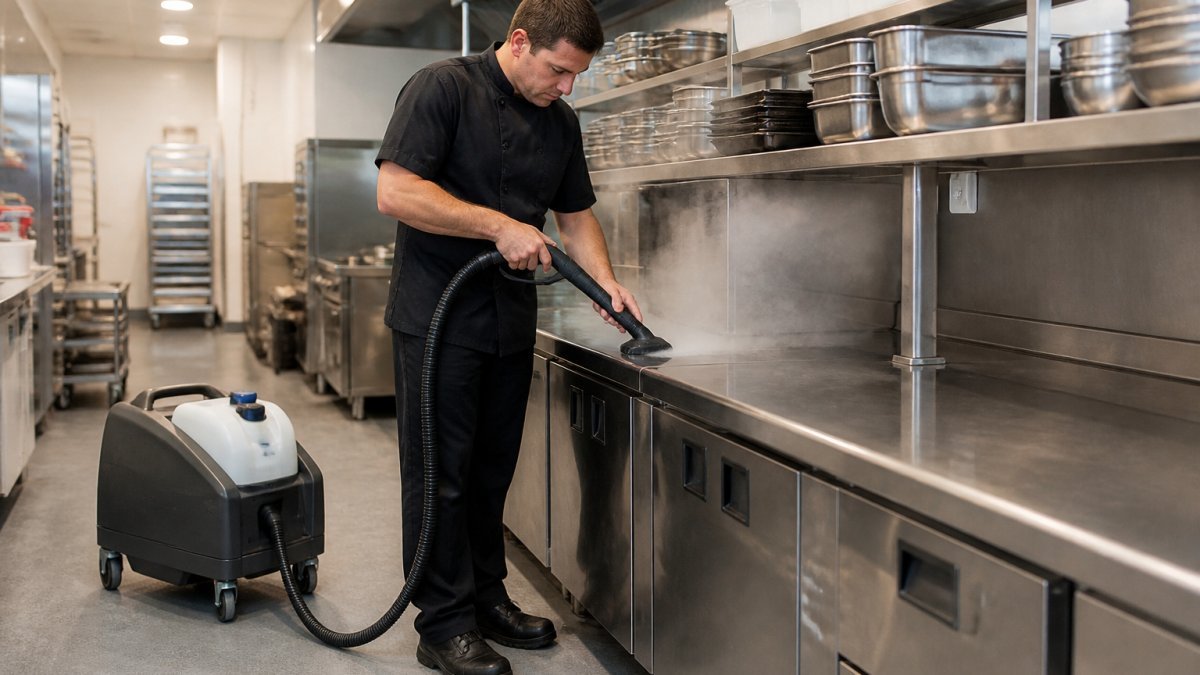
Hospitality environments contain mixed surfaces: stainless steel in kitchens, tile in bathrooms, carpeted areas in dining and guest spaces, marble in reception areas.
Combination units that include vacuum functionality extend versatility further. You can steam-clean carpeted areas, then immediately extract moisture, leaving surfaces dry enough for immediate use.
Detergent injection capability adds another dimension. The Pure v6-DT and Pure v6-D models include this functionality, allowing operators to regulate detergent flow based on the specific task.
Compact Design and Mobility for Busy Environments
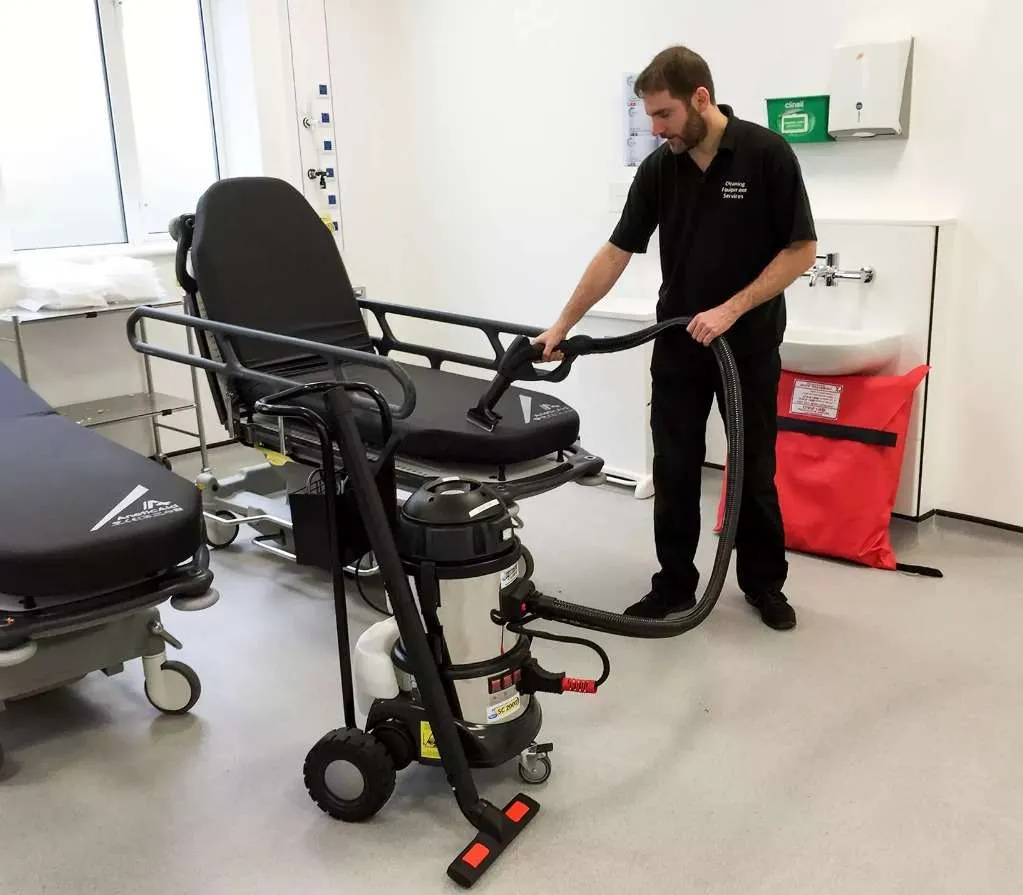
Hospitality spaces operate continuously. Your cleaning equipment cannot occupy floor space or create obstacles during service hours. Trolley-mounted designs keep machines mobile and allow staff to move between areas efficiently.
Compact footprints matter in kitchens where space is measured in centimetres. A machine that fits through standard doorways and manoeuvres in tight spaces becomes practical equipment rather than an installation project.
Steam Cleaner Maintenance and Long-Term Reliability
Maintenance separates machines that deliver three-year value from equipment that becomes problematic within months. Hard water areas present particular challenges for steam equipment, yet proper maintenance extends boiler life significantly.
Boiler Care in Hard Water Areas
Hard water deposits limescale inside boiler systems, reducing heat transfer efficiency and increasing the risk of component failure. Many facilities report that standard steam cleaners require descaling every few months, creating maintenance cycles that disrupt cleaning schedules and increase operational costs.
Pure Steam Cleaners provides a 3-year boiler guarantee, offering confidence that your equipment will maintain performance across the typical replacement cycle.
Regular maintenance still matters. Following operating instructions for boiler care, including water quality monitoring in hard water areas, preserves the advantages of self-descaling technology. The difference is that maintenance becomes preventive rather than reactive.
Continuous Operation and Downtime Prevention
Hospitality cleaning schedules don’t accommodate equipment downtime. When a machine fails during peak service hours, you’re either operating without proper cleaning capacity or paying emergency service rates to restore function.
Continuous-operation designs minimise failure risk. External heating elements that don’t sit in boiler water reduce stress on the system during extended use.
These design features compound across weeks and months.
Pure v6-DT Commercial Steam Cleaner With Vacuum and Detergent →
Steam Cleaning Return on Investment for Hospitality Businesses
Choosing a steam cleaner for hospitality ultimately depends on return on investment. Capital equipment purchases require confidence that operational savings and efficiency gains justify the initial expense.
Cost Savings on Chemical Purchases and Storage
Chemical cleaning systems generate recurring costs: purchasing inventory, storing hazardous materials, managing disposal, and replacing stock as supplies deplete.
Steam cleaning eliminates chemical purchasing. Your ongoing costs become water and electricity, expenses measured in pounds per month rather than hundreds of pounds per quarter.
Storage requirements also simplify. You’re not maintaining chemical inventory, managing safety documentation, or dedicating facility space to hazardous material storage.
Reduced Labour Time and Operational Efficiency
Steam cleaning accelerates certain tasks significantly. Grease removal that requires extended contact time with chemical cleaners happens faster with steam because heat and pressure work simultaneously.
In hospitality, labour efficiency directly affects profitability. When cleaning staff complete deep-clean tasks faster, you either reduce staffing requirements or redirect that capacity toward additional revenue-generating activities.
Equipment reliability contributes further. Machines that operate consistently without breakdown-related delays maintain predictable labour schedules.
Choosing Between Different Steam Cleaner Models
The Pure Steam Cleaners range demonstrates how specifications translate into practical differences. Understanding these distinctions helps you match equipment to your specific operational requirements.
| Model | Pressure & Volume | Key Feature | Best For |
|---|---|---|---|
| Pure s6-T | 6 bar, 3.2 kg/hr | Steam-only, continuous refill | Equipment cleaning, oven interiors, sanitisation |
| Pure v6 | 6 bar, 43 g/min | Steam + vacuum | Carpeted areas, mixed surfaces, moisture extraction |
| Pure v6-D | 6 bar, 43 g/min | Steam + vacuum + detergent | Heavy grease, kitchen deep-clean, flexibility |
| Pure v6-DT | 6 bar, 43 g/min | Steam + vacuum + detergent + trolley | Full-service hospitality, multiple surface types |
Steam-Only Versus Combination Steam and Vacuum Units
Steam-only machines excel when your cleaning tasks focus on sanitisation and grease removal on hard surfaces. Equipment cleaning, oven interiors, and surface sanitisation benefit from dedicated steam output without vacuum complexity.

Combination units add vacuum functionality, allowing you to extract moisture from carpeted areas and prevent water pooling on sealed floors.
The trade-off is complexity. Combination units require maintenance on both steam and vacuum components.
Detergent Injection Capability for Heavy-Duty Tasks
Detergent injection allows operators to introduce cleaning agents directly into the steam stream.
The advantage is flexibility. You’re not locked into either steam-only or chemical-dependent processes. You can steam-clean most areas, then apply detergent assistance where specific tasks require additional chemical support.
Models like the Pure v6-D and Pure v6-DT include switchable, regulatable detergent injection. Operators control whether detergent flows, how much, and for which tasks.
Key Factors to Evaluate Before Purchasing
Selecting the right equipment requires evaluating your specific operational context against available specifications and support options.
Matching Specifications to Your Cleaning Tasks
Begin by cataloguing the surfaces and soiling conditions you encounter regularly. Kitchen environments with heavy grease require higher pressure and volume than dining areas with light soiling.
Document the frequency and duration of cleaning tasks. If you’re running eight-hour cleaning shifts daily, continuous-operation design becomes essential.
Consider water quality in your area. Hard water regions benefit significantly from self-descaling technology that prevents limescale accumulation.
Support, Warranty and After-Sales Service
Equipment support quality often determines whether a machine becomes a reliable asset or an expensive problem.
Free next working day delivery for orders before 1pm removes logistics barriers.
Warranty coverage on the boiler, the most expensive component, protects against early failure.
Choosing a steam cleaner for hospitality requires balancing power, reliability, and practical fit with your operational environment.
Frequently Asked Questions
What specifications should I prioritise when choosing a steam cleaner for hospitality?
Focus on steam pressure (measured in bar) and steam volume output (g/min). For hospitality, 6 bar pressure with 43 g/min continuous steam output handles grease and soiling effectively. Check whether the unit combines steam with vacuum capability, which speeds up drying. If your facility has hard water, select models with external heating elements. Boiler material and warranty duration (3 years is standard for commercial use) also indicate reliability.
How can steam cleaning reduce costs in a commercial kitchen compared to chemical cleaners?
Steam eliminates the need for purchasing, storing and disposing of chemical cleaning products, which represents significant ongoing expense. A 2019 study in the Journal of Hospital Infection found steam technology effective for cleaning and disinfection without chemical alternatives. Labour time decreases because steam cuts through grease faster, reducing scrubbing and rinsing. You also avoid chemical safety training, protective equipment, and disposal compliance costs. These savings compound monthly, particularly for contract cleaning businesses serving multiple sites.
Will a single steam cleaner work for different hospitality cleaning tasks, or do I need multiple units?
A versatile commercial steam cleaner with both steam and vacuum capability handles most hospitality tasks: kitchen hoods, marble floors, tiles, bathroom fittings, and metal surfaces. Models with detergent injection are particularly effective for heavy grease removal. However, if your contract cleaning business serves 15+ diverse clients with very different requirements, you may benefit from a steam-only unit for specialist jobs alongside a combination unit for general work. This approach maximises efficiency and reduces machine wear.
What maintenance does a commercial steam cleaner require, especially in hard water areas?
Regular boiler care is essential. Models with external heating elements (where heating coils don’t sit in water) reduce limescale buildup compared to immersion-element designs. Follow the manufacturer’s maintenance instructions, particularly regarding water quality and descaling intervals. In hard water areas, descaling frequency may increase. Check water container capacity; units with 3-litre containers and automatic refill systems minimise downtime between fills during continuous operation.
Can steam cleaning alone meet hygiene and food safety regulations for hospitality venues?
Yes. Steam achieves sanitisation through heat and pressure without chemicals. Care homes, hospitals, and food processing facilities rely on steam cleaning to meet strict hygiene standards. A 2019 study comparing steam technology with two-step chemical procedures found steam technology advantageous for cleaning and disinfection. Always verify specific regulatory requirements for your sector (food safety, care standards, etc.) and ensure your steam cleaner achieves the required temperature and pressure. Documentation of cleaning procedures supports compliance audits.
What’s the difference between steam-only cleaners and combination steam-and-vacuum models?
Steam-only units (like the Pure s6-T) generate high steam volume for equipment cleaning and extended use without refill downtime. Combination units (like the Pure v6 series) add vacuum capability, which removes dirty water and dries surfaces faster, reducing slip hazards and speeding turnaround between cleaning tasks. Combination units are more versatile for hospitality because they handle both wet and dry cleaning. Steam-only machines suit specialist jobs where only steam is required and extended runtime matters more than drying speed.
How does steam cleaner size and mobility affect usability in a busy hospitality environment?
Compact, trolley-mounted designs are essential in hospitality. Smaller footprints fit through doorways and into tight kitchen and bathroom spaces without disrupting service. Trolley wheels allow staff to move between areas quickly. Continuous steam output (where the boiler refills automatically without cooling down) eliminates downtime and keeps cleaning schedules on track during peak hours. Portable units also suit contract cleaning businesses that transport equipment between multiple client sites, reducing setup time and labour costs.

