
Commercial & Industrial Steam Cleaners | Pure Steam Cleaners.uk


Key takeaways
- Self-descaling helps prevent limescale from building up inside commercial steam cleaners.
- Regular descaling can support more consistent steam pressure, heat-up times and cleaning performance.
- Automatic or integrated descaling features can reduce the amount of hands-on maintenance required from operators.
- Businesses in hard-water areas may see the benefits sooner because mineral deposits can accumulate more quickly.
- Choosing a commercial steam cleaner with practical maintenance features can help protect your investment and reduce unnecessary downtime.
If you rely on steam cleaning equipment day after day, maintenance is not something you can afford to overlook. Understanding why self-descaling matters in commercial steam cleaners can help you choose equipment that remains reliable, efficient and ready for demanding cleaning tasks. Limescale may begin as an invisible problem, but over time it can affect heating components, steam output and the overall performance of the machine. For busy commercial environments, a self-descaling system can take some of that maintenance burden away.
Check out our range of self-descaling steamers!
What Is Self-Descaling in a Commercial Steam Cleaner?

Self-descaling is a feature designed to help remove or manage the mineral deposits that build up inside a steam cleaner as water is repeatedly heated.
Tap water naturally contains dissolved minerals, particularly calcium and magnesium. When water is heated to produce steam, these minerals can be left behind. Gradually, they form the hard, chalky substance we know as limescale.
Think of it in the same way as the inside of a frequently used kettle. That rough white coating does not appear overnight. It builds layer by layer. A commercial steam cleaner can face the same issue, except the deposits are forming around components that are essential to producing reliable steam.
A self-descaling or integrated descaling system helps make controlling that build-up easier, reducing the need to rely entirely on manual intervention.
Why Does Limescale Build Up in Steam Cleaners?

Every time a steam cleaner heats water, it creates the conditions for mineral deposits to form.
The rate of build-up depends on several factors, including the hardness of the water, how frequently the machine is used and its design. A steam cleaner used occasionally in a soft-water area may experience relatively slow build-up. A machine operating for hours every day with hard water can face a very different situation.
Commercial cleaning equipment is particularly important here because usage can be intensive. Hotels, healthcare settings, kitchens, leisure facilities, schools and cleaning contractors may depend on steam equipment repeatedly throughout the working week.
More water through the machine means more opportunities for minerals to accumulate.
Hard Water Can Make Descaling Even More Important
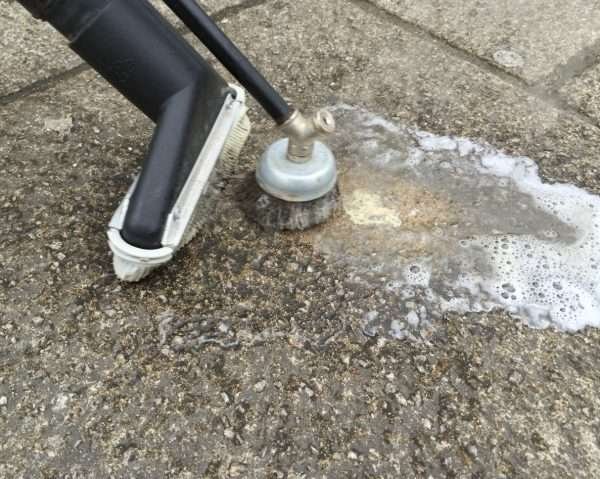
Water hardness varies considerably across the UK. In hard-water areas, tap water contains higher concentrations of dissolved calcium and magnesium.
For a commercial steam cleaner, that can mean faster mineral accumulation.
You may already recognise the signs of hard water elsewhere: marks around taps, scale inside kettles or deposits on shower screens. Inside a steam cleaner, however, you cannot always see the problem developing.
That is one reason preventive maintenance matters. Waiting until performance noticeably drops can mean allowing scale to accumulate for far longer than necessary.
How Limescale Can Affect Steam Cleaner Performance

A little scale might not sound particularly threatening. The problem is what happens when those small deposits continue to accumulate.
Steam cleaners depend on controlled heating, water flow and pressure. Mineral deposits can interfere with these processes, particularly when maintenance is neglected.
Over time, you may notice the machine does not feel quite as responsive as it once did. Steam production may become less consistent, heating performance can be affected and the equipment may require more attention.
In a commercial setting, even small performance issues matter. A machine that takes longer to complete the same cleaning job can have a knock-on effect across an entire shift.
Self-Descaling Helps Maintain Consistent Steam

One of the biggest reasons self-descaling matters in commercial steam cleaners is consistency.
Commercial cleaners need equipment they can depend on. If you are moving through hotel rooms, tackling kitchen surfaces or deep-cleaning a busy public facility, inconsistent steam output is more than a minor irritation.
Keeping mineral deposits under control helps the machine operate closer to the way it was designed to.
That means operators can focus on cleaning rather than constantly wondering whether the equipment is performing properly.
Consistency is easy to underestimate until it disappears. Reliable cleaning equipment should simply get on with the job.
It Can Reduce Time Spent on Routine Maintenance

Commercial cleaning teams already have plenty to do. Adding complicated equipment maintenance to the list can easily result in tasks being delayed, forgotten or completed inconsistently.
A self-descaling feature can simplify this process.
Depending on the particular machine, the system may automate part of the descaling process, alert the operator when attention is required or use components designed to make scale management easier.
That does not mean the machine becomes maintenance-free. No commercial cleaning machine is. Filters, tanks, accessories, seals and other components may still require inspection and care.
The advantage is that one important maintenance task can become easier to manage.
Why Manual Descaling Can Be Easily Forgotten

Imagine a cleaner finishing a long shift. There are machines to put away, cloths to wash, tanks to empty and tomorrow’s work to prepare for.
Is descaling really going to be the first thing on their mind?
Probably not.
Manual maintenance schedules work well when they are followed consistently, but commercial environments are busy. Staff change, workloads increase and routines get interrupted.
Integrated maintenance features reduce the amount of memory and guesswork involved. The easier a machine is to look after, the more likely it is to receive the care it needs.
Self-Descaling Can Help Protect Heating Components

The heating system sits at the heart of a steam cleaner. Without efficient heating, there is no useful steam.
Limescale can act like an unwanted insulating layer around heated surfaces. Instead of heat transferring as intended, deposits can interfere with the process.
That is hardly ideal for equipment designed around rapidly and repeatedly heating water.
Controlling scale therefore is not simply about keeping the inside of a machine looking clean. It is about protecting the systems responsible for doing the actual work.
For businesses investing in professional cleaning equipment, that protection matters.
Better Maintenance Can Support a Longer Working Life

Commercial steam cleaners are an investment, so naturally you want to get as much useful working life from them as possible.
Good maintenance plays an important role in achieving that.
There is no single feature that can guarantee how long a machine will last. Usage, servicing, storage and operator care all matter. However, allowing limescale to accumulate unnecessarily adds another source of stress and potential performance problems.
Regular scale management removes one avoidable issue from the equation.
In other words, buying quality equipment is only half the story. Looking after it is what helps you get value from that investment.
Less Downtime Matters in Commercial Cleaning

A domestic steam cleaner being unavailable for a day might be inconvenient. A commercial machine being unavailable can disrupt an entire cleaning operation.
Staff may have to switch equipment, alter schedules or use slower cleaning methods while the machine is inspected or serviced.
For a cleaning contractor, downtime can be particularly frustrating because equipment often needs to travel between jobs and perform on demand.
This is another reason self-descaling matters in commercial steam cleaners. Preventive maintenance features can help businesses address scale before it contributes to larger performance issues.
It is rather like maintaining a work van. Routine care may feel less urgent than the job in front of you, but it is far easier to manage than an unexpected breakdown halfway through a busy day.
Self-Descaling Can Make Equipment Easier for Teams to Manage

Commercial cleaning equipment is often shared between several members of staff.
That changes the maintenance equation.
With one owner and one machine, it is relatively easy to know when something was last cleaned, checked or descaled. With multiple operators, responsibility can become less clear.
“Someone else probably did it” is not a particularly effective maintenance strategy.
Features that simplify or automate routine care can therefore be useful for larger cleaning teams. They create a more standardised approach and reduce reliance on one person remembering every maintenance requirement.
For facilities managers, that can make equipment management considerably easier.
Check out our range of self-descaling steamers!
Does Self-Descaling Mean No Maintenance Is Required?

No. Self-descaling should not be confused with self-maintaining.
Commercial steam cleaners still need proper care according to the manufacturer’s instructions. That can include emptying or rinsing tanks, checking accessories, inspecting hoses and cables, replacing consumable components and arranging servicing when required.
The exact maintenance schedule will depend on the machine.
Self-descaling simply makes one particular challenge easier to control: mineral accumulation.
It is a useful feature, not a magic button.
Automatic Descaling vs Manual Descaling
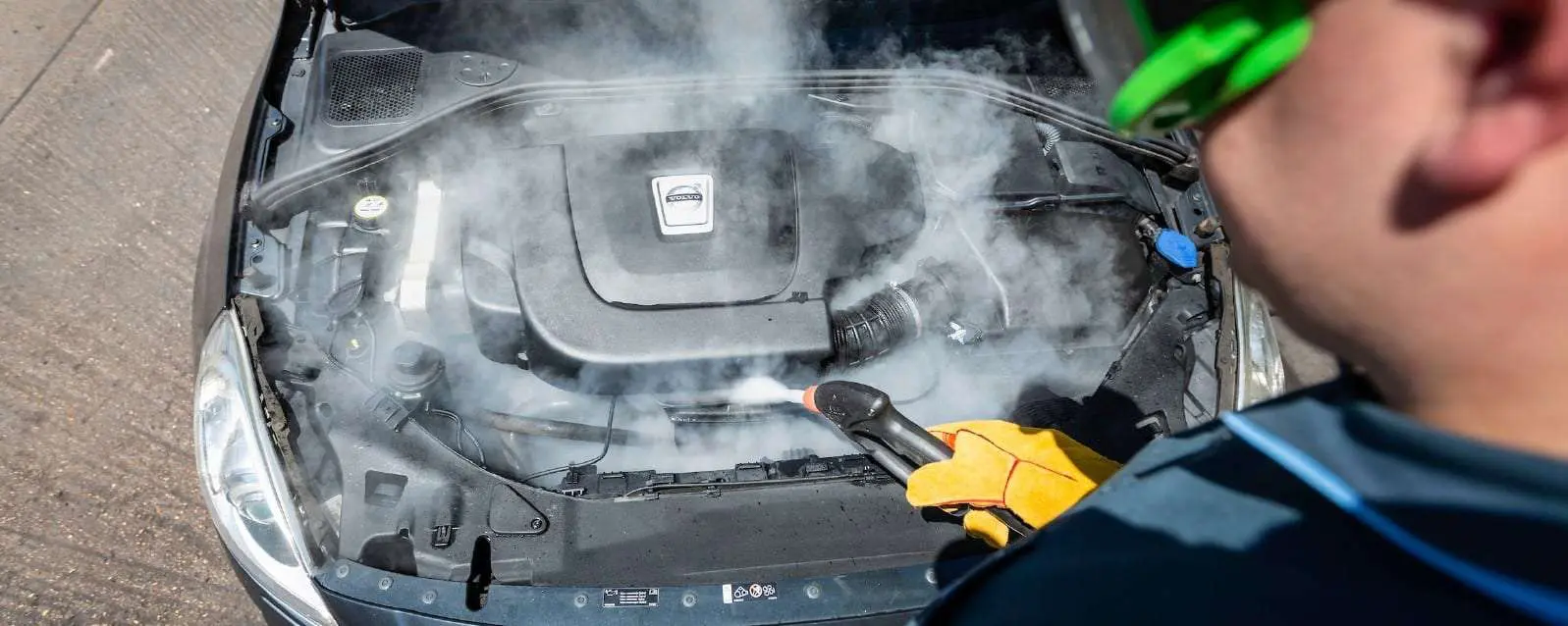
So, is automatic descaling always better than manual descaling?
Not necessarily. The right choice depends on the machine, your cleaning workload and how effectively maintenance is managed.
Manual descaling can work perfectly well when operators follow the correct procedure at the recommended intervals. For businesses with strong equipment-maintenance routines, this may not be a problem.
Self-descaling becomes particularly attractive when equipment is used frequently, several people operate the same machine or you simply want to reduce the amount of hands-on maintenance involved.
The important question is not whether a machine has the fanciest maintenance system. It is whether its maintenance requirements realistically fit your working environment.
Why Commercial Usage Changes the Equation

Commercial steam cleaners often face workloads that domestic machines never encounter.
A household user might bring out a steam cleaner occasionally. A professional cleaner could use one across multiple rooms, buildings or customer sites in a single week.
That difference matters.
Frequent heating cycles and larger volumes of water can make effective scale management increasingly important. Maintenance features that seem like optional conveniences on paper can become genuinely useful when a machine is working hard.
When comparing equipment, think beyond the specification sheet. Ask yourself what owning and operating the machine will actually look like six months or two years down the line.
The Connection Between Maintenance and Cleaning Productivity

Cleaning productivity is not just about buying the most powerful machine available.
It is about keeping equipment performing reliably enough for staff to work efficiently.
Imagine two identical cleaning teams. One spends the morning moving steadily from task to task. The other stops repeatedly to deal with inconsistent equipment, maintenance problems or a machine that is not producing steam as expected.
Which team gets more done?
The answer is obvious.
Good equipment maintenance sits quietly behind productivity. You rarely notice it when everything is working correctly, but you certainly notice when it is not.
Can Self-Descaling Help Reduce Long-Term Costs?

When evaluating commercial cleaning equipment, the purchase price is only one part of the cost.
You also need to consider maintenance, servicing, consumables, staff time and potential downtime.
A cheaper machine that constantly demands attention may eventually become more expensive to operate than equipment that was easier to maintain from the beginning.
This does not mean a self-descaling system automatically guarantees lower costs. However, features that make preventive maintenance easier can contribute to more efficient equipment management.
That is particularly valuable when you operate several machines across a site or cleaning fleet.
What Should You Look for in a Commercial Steam Cleaner?

Descaling should form part of a wider equipment assessment rather than being the only feature you consider.
Look at how and where the steam cleaner will actually be used. Consider steam pressure, heating performance, capacity, accessories, manoeuvrability, build quality and ease of operation alongside maintenance requirements.
You should also ask how straightforward the machine is to service and what support is available if something goes wrong.
A brilliant specification means little if the equipment is awkward to maintain or poorly suited to your cleaning environment.
The best commercial cleaning machine is usually the one that balances performance with practicality.
Who Benefits Most From Self-Descaling Steam Cleaners?

Self-descaling can be particularly useful for organisations that operate steam cleaners regularly or depend heavily on equipment availability.
That might include contract cleaners, hospitality businesses, schools, healthcare environments, leisure facilities, commercial kitchens and facilities-management teams.
It can also be valuable wherever equipment is shared by several operators.
The harder a machine works, the more important sensible maintenance becomes.
Why Ease of Maintenance Should Influence Your Buying Decision

Maintenance rarely feels like the most exciting feature when buying a new steam cleaner.
Pressure, temperature and cleaning power naturally grab the attention first. But once the machine becomes part of your everyday operation, ease of maintenance suddenly becomes much more interesting.
A machine can have impressive specifications and still become frustrating if it is difficult to look after.
That is why self-descaling matters in commercial steam cleaners when comparing models for regular professional use. It tackles a predictable maintenance challenge before it becomes an unnecessary headache.
Think of maintenance features as the backstage crew at a theatre. They might not receive the applause, but the performance quickly falls apart without them.
Self-Descaling Is Part of Smarter Equipment Ownership

There is a big difference between owning commercial cleaning equipment and managing it properly.
Smart equipment ownership means thinking about what happens after the purchase. Who will operate the machine? How frequently will it be used? Who checks it? How easy is routine maintenance? What happens if something goes wrong?
Self-descaling fits neatly into that bigger picture.
It is not there simply to add another feature to a product specification. Its value comes from making scale management easier and helping operators maintain dependable performance over time.
Choosing the Right Steam Cleaner for Your Business

Every commercial environment presents different cleaning challenges. A machine that works brilliantly in a small hospitality venue might not be the right choice for a large facilities-management operation.
Before buying, consider your cleaning frequency, floor area, types of surfaces, staffing, storage space and water conditions.
Maintenance deserves a place on that list too.
At Pure Steam Cleaners, we understand that businesses need more than impressive numbers on a specification sheet. Commercial cleaning equipment has to work reliably in the real world, where time is limited and machines are expected to earn their keep.
Choosing equipment with practical maintenance features can make day-to-day operation easier while helping you take better care of your investment.
Why Self-Descaling Matters in Commercial Steam Cleaners Over the Long Term

The real value of self-descaling becomes clearer over months and years rather than during the first few uses of a new machine.
Limescale is a gradual problem. It builds quietly, which makes it easy to ignore until its effects become noticeable.
That is precisely why self-descaling matters in commercial steam cleaners used regularly. By making scale management part of normal machine care, businesses can take a preventive approach rather than waiting for mineral build-up to become a performance issue.
When commercial cleaning equipment needs to work hard every day, the small features that keep it working properly can be every bit as important as the headline specifications.
Check out our range of self-descaling steamers!
Pure Steam Cleaners specialises in hiring and selling powerful, self-descaling commercial and industrial dry steam cleaners. Our machines are ideal for deep cleaning in kitchens, healthcare facilities, and manufacturing plants without harsh chemicals. Hires and sells new and second-hand cleaning equipment, including industrial vacuums, floor scrubbers, pressure washers, and floor polishers at Cleaning Equipment Services Ltd. We’re always available to answer any questions and provide guidance on the best cleaning methods and procedures. We’re also very patient and accommodating with explaining the operation and maintenance of the equipment.

Leave a Reply
You must be logged in to post a comment.